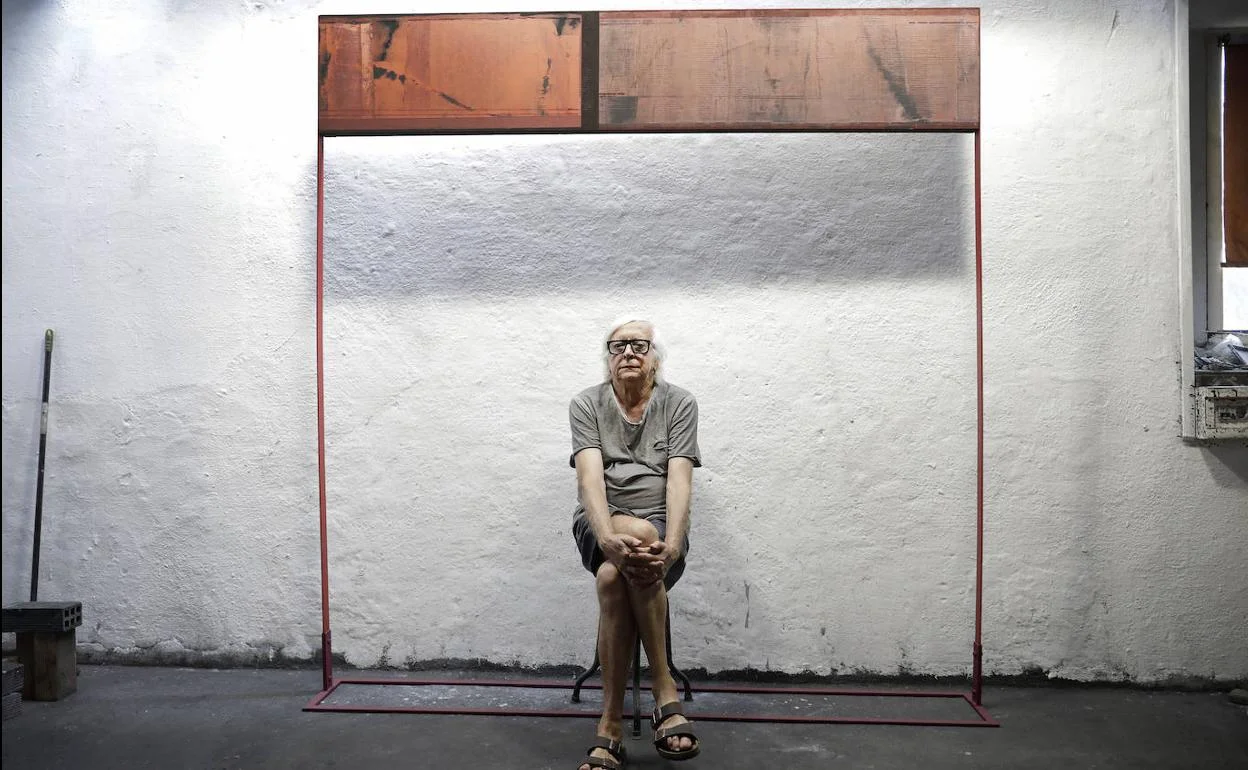
Enrique Brinkmann (1938) was born in Málaga, Spain, in the same building where Pablo Picasso was born 57 years earlier. A self-taught artist, he initially began studying Industrial Engineering in 1955, but his passion for painting, influenced by the works of Dostoevsky, led him to abandon his studies and pursue art full-time. His early work was shaped by a deep engagement with literature and was often infused with influences from artists like Goya, Bacon, and Janssen.
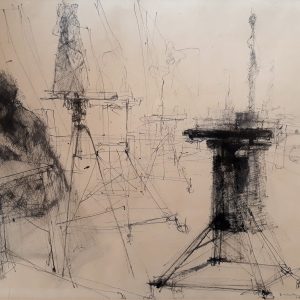
His artistic career began in earnest in 1957 when he held his first solo exhibition in Málaga and co-founded the “Grupo Picasso” with other local artists. His journey took him across Europe, spending time in Germany, where he became involved with the Fluxus movement, and later living in Rome. He returned to Spain in 1966, where his focus shifted primarily to drawing, painting, and printmaking. His work evolved over the years, transitioning from phantasmagorical imagery to abstract Informalism in the 1990s, characterized by his experimentation with materials such as wood, collage, and earthy acrylic paints.
Brinkmann’s work has been showcased extensively in exhibitions across Europe and beyond, including major international events like the Bienal de São Paulo and the International Art Biennale in Beijing. His art is part of significant collections, including the Museum of Modern Art (MoMA) in New York. He has also won prestigious awards, such as the Painting Award at the International Festival in Cagnes-sur-Mer in 1971 and the National Engraving Prize in 1994. His exhibitions span numerous countries, including Spain, Germany, Belgium, Switzerland, and Italy, with ongoing participation in global art fairs.