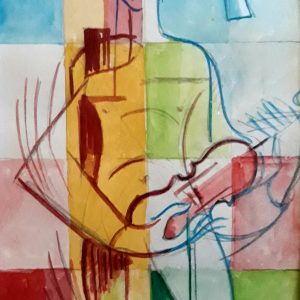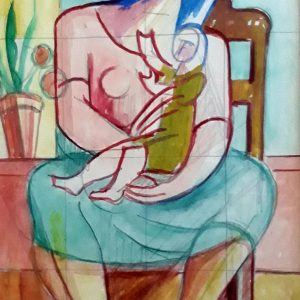
Joan Sandalinas (Barcelona, 1903 – 1991) was a Spanish painter known for his distinctive blend of influences and solitary artistic journey. He often credited his teachers as “Cézanne, Picasso, de Chirico, and the streets of Barcelona,” drawing on a rich combination of formal training and local inspiration. Sandalinas began his studies within the network of workers’ athenaeums in Barcelona and continued his artistic education at the Cercle Artístic de Sant Lluc, a place where Joan Miró also studied.
His artistic career spanned several decades, during which he embraced a range of styles including Cubism, Purism, and Constructivism, while also drawing from Romanesque art. In his early works from the 1920s, he depicted popular scenes of everyday life, such as workers and families, bringing a fresh perspective to common subjects. In 1948, he participated in the I Salón de Octubre, where his two abstract paintings garnered significant attention for their power. Despite his early recognition, Sandalinas remained outside the official artistic scene, preferring solitude in his creative process. His works were included in collective avant-garde exhibitions, but he did not hold a solo exhibition until 1985, a testament to his preference for introspection over public acclaim.
Throughout his career, Sandalinas’ work was featured in several key exhibitions, including collective displays of the Barcelona pictorial school. Though his appearances were limited, his art was recognized in studies dedicated to his contribution to avant-garde art. His works have been part of important collections and exhibitions that highlight his unique place in the history of Spanish modernism.