Viktor Templin (1920-1994) was a Russian painter born in Vechenki, Russia. He studied at the Serpukov Art School and Nizhni Novgorod Art School, graduating in 1937. Despite his early talent, Templin’s modernist tendencies led to his imprisonment during the Stalin era. He was sentenced to four years in the notorious Magadan Labour Camp in Siberia, where he met and later married fellow artist Nina Lugovskaya. Templin and his wife eventually settled in Vladimir, east of Moscow, in 1962.
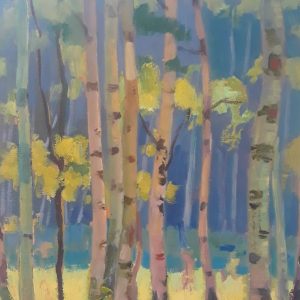
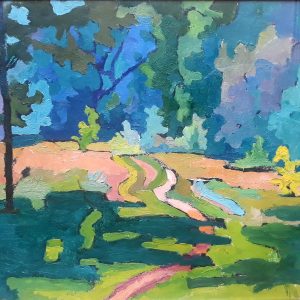
His artistic career is marked by his vibrant use of color and abstraction, often reflecting his love for nature and the Russian landscape. His work, though rooted in his personal experiences, conveys a universal optimism and life-affirming energy, achieved through the bold and simple application of paint. His landscapes, brimming with color, depict the vastness and beauty of rural Russia and are a testament to his undying optimism, even during the challenging political climate of the Soviet regime. Although not initially admitted to the USSR Union of Artists due to his criminal record, Templin’s work was eventually selected for the All-Union Exhibition, marking a significant achievement in his career.
Templin’s paintings have been featured in numerous solo and group exhibitions, both in Russia and internationally. His works are represented in the permanent collections of the National Galleries of Vladimir, Suzdal, Kovrovo, and Alexandrov, as well as in private collections in Spain, France, Great Britain, Japan, China, and the USA. His vibrant, life-affirming paintings continue to resonate with audiences worldwide, symbolizing the enduring spirit of resilience and hope.