
From dimly lit cathedrals to silent temples, sacred art holds a strange power: a painting, statue, or icon can silence a room, calling us into an inner stillness, even when we do not share the faith it represents. What is it about sacred art that speaks across beliefs, across doubt, across time
Beauty, Contemplation, and the Space Between
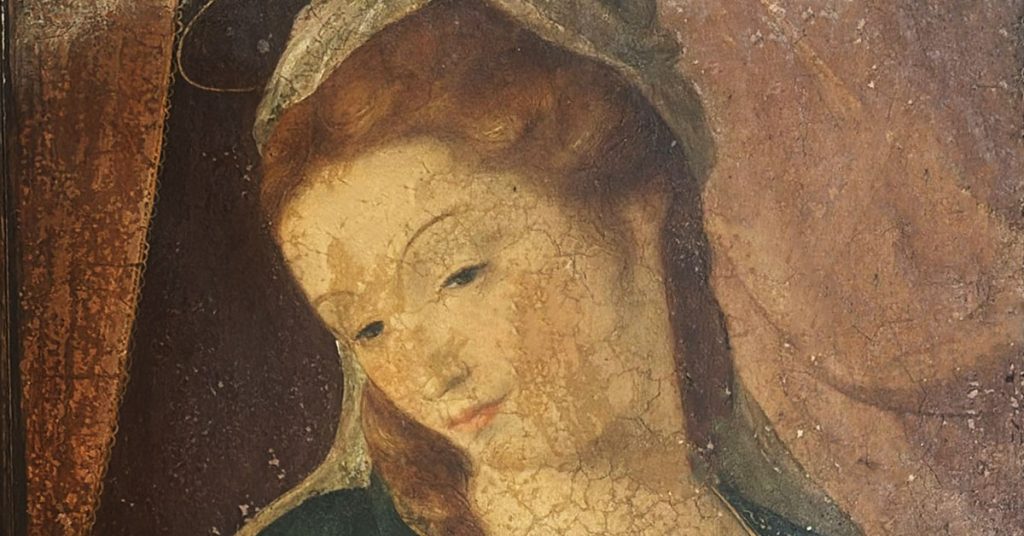
Immanuel Kant, in his Critique of Judgment, offers one clue. He argues that true beauty is equivalent neither to utility nor perfection, but is still purposive.
This paradoxical phrase means that something beautiful appears to fulfill an inner structure or order, even though its purpose is not utilitarian, transactional, or demanding. Sacred art often functions precisely in this zone: not to persuade, not to convert, not to sell something, but to invite contemplation.
It opens up a space where the viewer is suspended, neither purely secular nor purely religious, between the finite and the infinite.
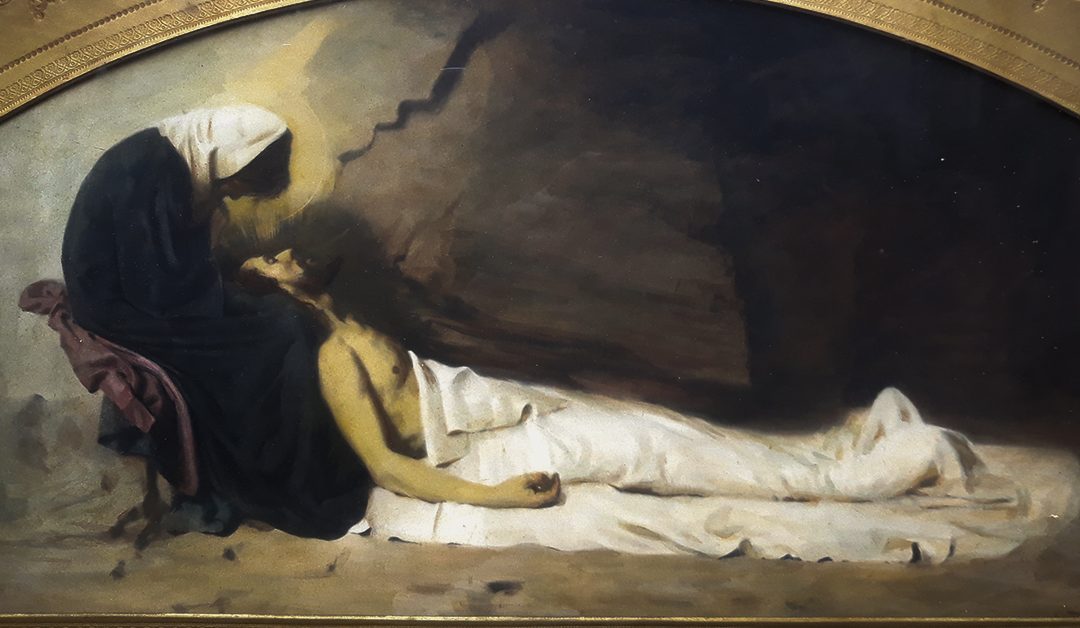
Think of encountering a powerful depiction of the dead Christ: the body lifeless, shadows pressing into every fold of flesh, the face bearing both serenity and sorrow.
The experience is not merely aesthetic appreciation, but an encounter with mortality. It commands respect, evokes pity, and invites empathy. The sacred in this sense does not hide human frailty; it lays it bare, giving dignity to suffering, and thereby connects us to something universal.
The Sublime, the Human, and Form United
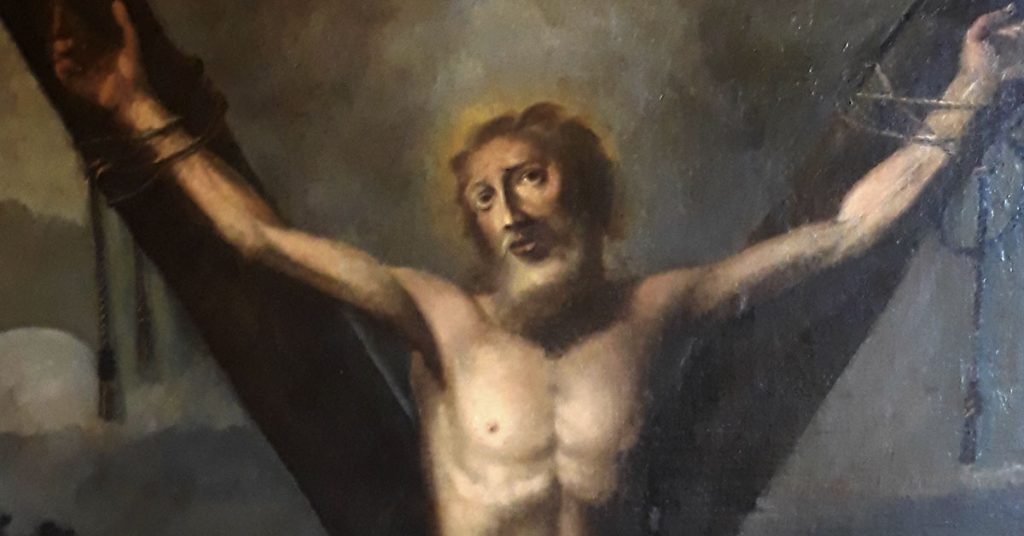
Kant’s sublime, something vast, overwhelming, yet not destructive, comes into play. Sacred art often blends beauty with the sublime.
The subject might evoke suffering, death, or loss, yet the execution, the form, the balance, the colors, and the composition hold us instead of overwhelming us. It is art braided with spirituality: not an escape from being human, but a gaze into being human fully. When form and meaning are bound together, they invite reverence: not as fantasy, but as recognition.
Hegel gives us yet another layer. For him, art is the “sensuous embodiment of Spirit.” In the figure of Christ dead, or in sacred iconography, we see more than representation: Spirit recognizing itself in the finite.
The mediums—wood, stone, paint, gold leaf—are not incidental. The wood grain, the texture of linen, the exactness of shadows, all become bridges between divine narrative and our everyday experience of grief, love, and loss. In Hegel’s words, beauty is “the sensible shining of the Idea.”
When truth manifests externally and remains united to its appearance, the work is not just true, it is beautiful.
Universality, Mortality, and Shared Longing
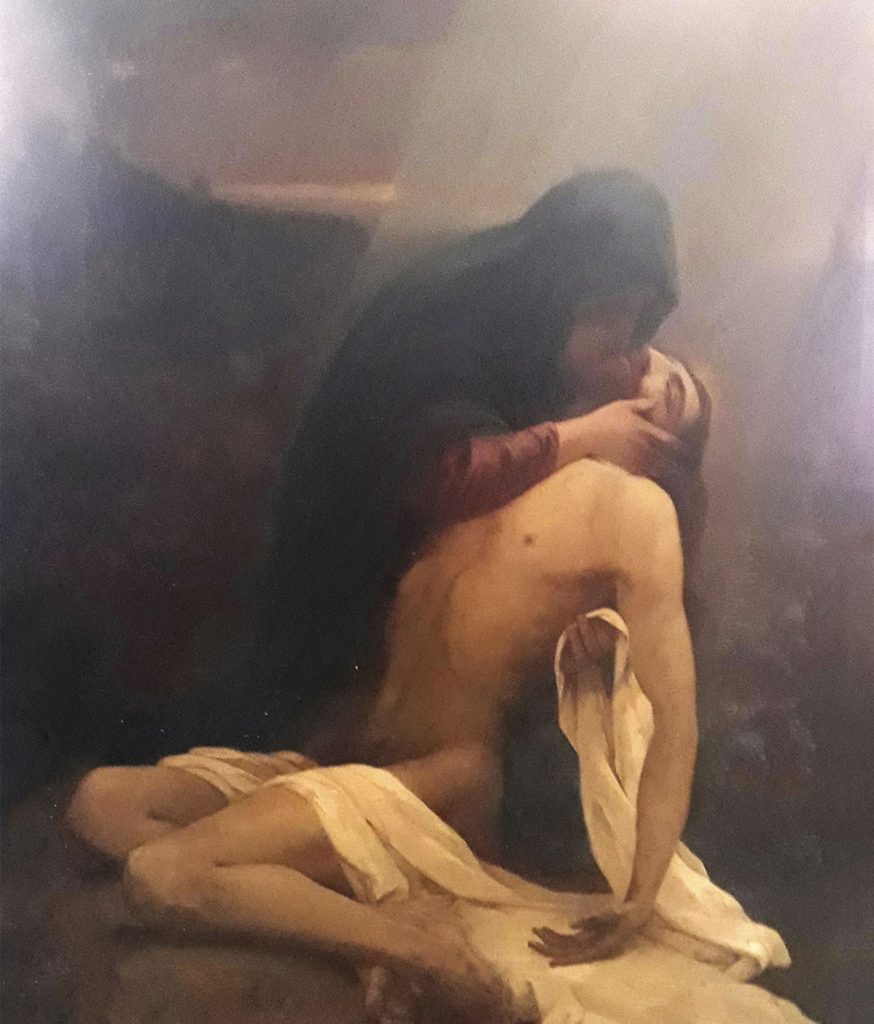
Even for those who are not religious, sacred art has a magnetic pull because it touches on universal themes: birth and death, suffering and mercy, hope and despair.
The sacred does not require belief; it requires openness. We see mortality—ours and others—in the image of the dead Christ or in a serene depiction of a meditating Buddha or a saint in repose. Even if we do not share a creed, we share vulnerability. Sacred art holds up that vulnerability with dignity.
In sacred art, symbols and ritual gestures amplify that shared humanity. Think of a cross, a halo, eyes turned heavenward, hands raised. These are not just Christian symbols; they are metaphors, imagery that resonates because we all know loss, transcendence, and desire. Sacred art does not hide these truths; it allows us to dwell in them, to see that even in endings there is beauty, even in suffering there is meaning.
Why This Matters Today

In our fast-paced, image-flooded age, sacred art offers a rare pause. One where we are allowed not to scroll, not to snap, not to like—but simply to stand.
To feel. To soak in the presence. For those without formal faith, that pause can be restorative, even transformational. It reminds us that meaning does not always need to be explained, that awe can exist without persuasion.
Sacred art teaches us to hold contradiction: grief and grace, mortality and hope, suffering and beauty. And perhaps that is its strongest gift for non-believers: the permission to hold both the grotesque and the sublime, to believe that vulnerability does not weaken, but enriches.
An Invitation to Encounter
Sacred art touches us not because we believe in its doctrines, but because it mirrors the deepest truths of being human. It gives form to grief and beauty, mortality and hope, and creates a space where we are free to contemplate what matters most.
If you felt something stir while reading this — a sense of stillness, curiosity, or longing — we invite you to take the next step.
All artwork images featured in this article are part of Madame Flihan’s Collection. If you are interested in any of the pieces, please feel free to contact us for more information.
Send us a message today to view our private selection and discover a piece that speaks to you. The right work does more than decorate a wall; it becomes a companion, a daily invitation to pause, to reflect, to dwell in beauty.