
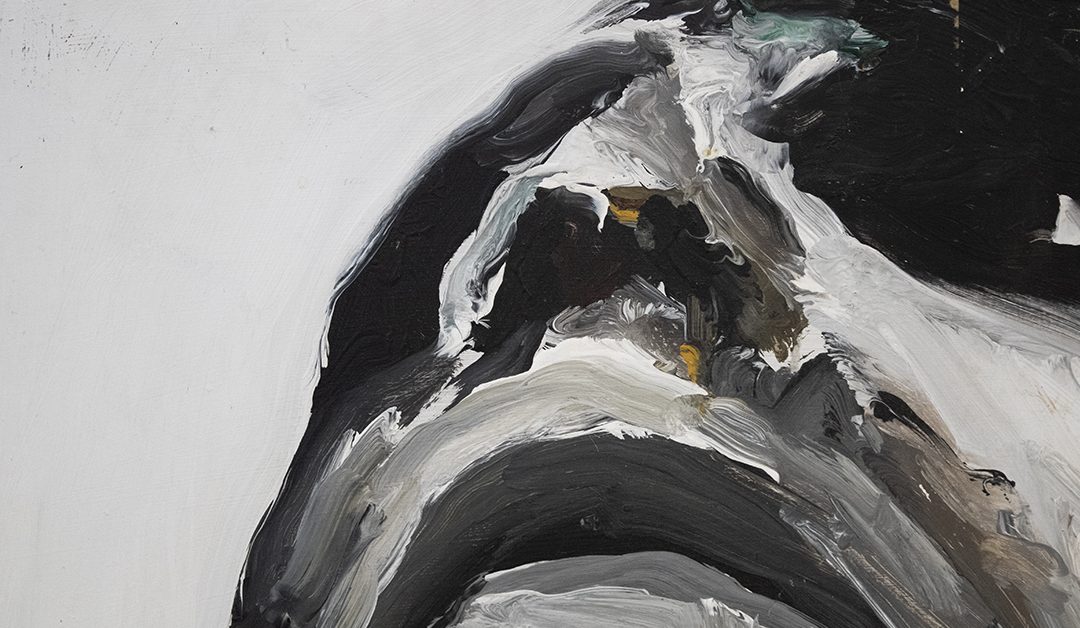
What makes a piece of art feel intimate? Why do certain works invite us closer, holding our attention in a way that feels almost personal?
A single element does not define intimacy in art. It emerges through a combination of scale, material presence, and emotional openness. Subtle qualities that shape how we experience a work beyond its surface.
At MadameFlihan, this idea often guides how we engage with and present our artworks. The most compelling pieces tend to create a quiet, direct relationship with the viewer, one that unfolds gradually and lingers.
Scale in Art: Creating a Personal Viewing Experience

Pancho Cossío | Untitled | 22 x 30 cm | Oil on Canvas
In discussions around intimacy in art, scale plays a defining role in how a work is experienced. It quietly determines how close we stand, how long we look, and how deeply we engage.
Smaller works tend to draw the viewer inward. They require a deliberate act of approach, reducing the distance between observer and object until the experience begins to feel almost private. As proximity increases, peripheral distractions fall away, and attention settles into a more concentrated, focused state.
At this distance, viewing begins to resemble reading. The eye moves more slowly, tracing surface, texture, and subtle variations that might otherwise go unnoticed. Time itself seems to expand, allowing the work to unfold gradually rather than all at once.
There is also an embodied dimension to consider. The philosopher Maurice Merleau-Ponty emphasized that perception is grounded in physical presence. That we encounter artworks not only visually, but also spatially. Smaller works heighten this awareness, making the viewer more conscious of their own position and movement.
In this way, scale becomes relational. It shapes distance, directs attention, and slows perception. This is where intimacy in art begins to take form: in a focused, almost introspective exchange between the artwork and a single viewer.
The Human Touch: Texture, Gesture, and Presence
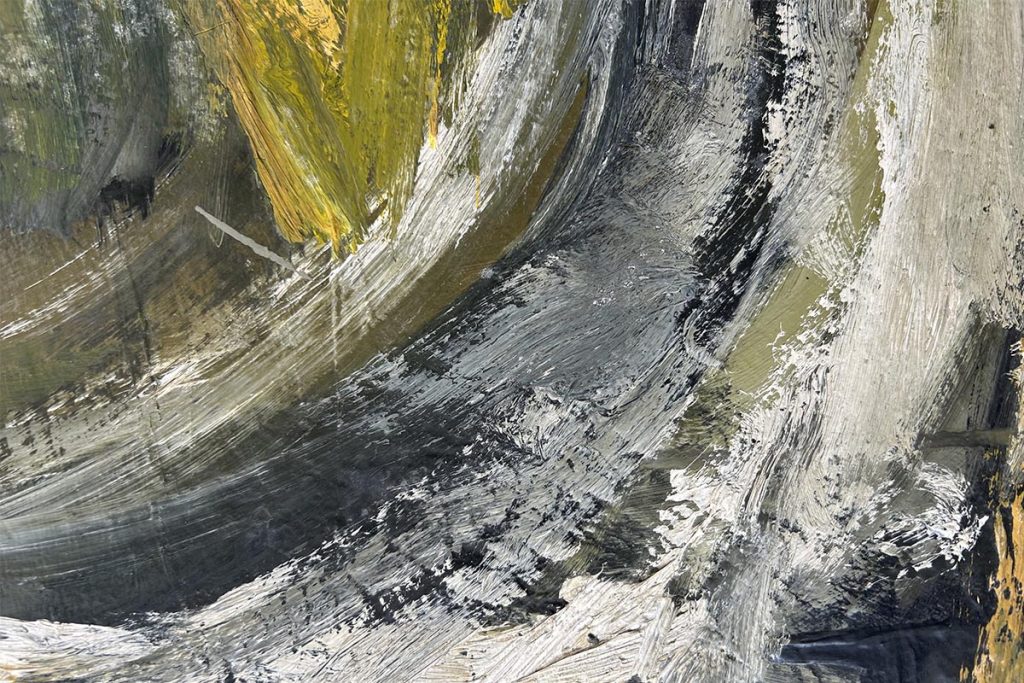
Carlos Vidaurre | Untitled | 116 x 89 cm | Oil on Canvas
A strong sense of intimacy often comes from the visible presence of the artist. Details such as brushstrokes, surface texture, and material irregularities carry traces of the creative process.
These elements reveal the work as something constructed through time and intention. They allow the viewer to perceive not only the final image, but the gestures behind it.
The art critic John Berger, in Ways of Seeing, reflects on how we engage with images beyond their immediate appearance. This perspective resonates strongly here: intimacy develops when we begin to sense the act of making within the work itself.
Vulnerability in Art: Exposure, Restraint, and Emotional Precision

Untitled | Belen Arias | 91 x 60 cm | Oil on Canvas
Within the broader discussion of intimacy in art, vulnerability emerges as a defining condition. It is not simply a matter of emotional expression, but of how much a work allows itself to remain open, unresolved, and perceptible without fully explaining itself.
Certain artworks carry this quality through restraint. What is withheld becomes as significant as what is visible. A gesture that feels suspended, a surface that reveals hesitation, an image that resists immediate clarity. These elements create a space in which the viewer is not instructed, but invited to engage more attentively.
This approach resonates with the thinking of Susan Sontag in Against Interpretation, where the experience of art is preserved in its immediacy rather than reduced to explanation. In this context, vulnerability allows the work to remain present as an experience, rather than something to be resolved through interpretation.
There is a form of precision in this openness. It does not rely on intensity or excess. It creates a controlled tension, where something is offered without being fully disclosed. The viewer becomes part of the encounter, bringing their own perception and memory into the work.
This is where art’s intimacy deepens. The relationship shifts from observation to involvement, shaped by attention and sensitivity rather than certainty.
The Experience of Intimacy in Art
Intimacy in art emerges through alignment. Scale, material presence, and emotional openness converge to shape a more focused and personal encounter.
It exists in the space between the viewer and the work, where perception slows, and attention deepens. What remains is not only the image, but the experience of having engaged with it closely, something that persists beyond the moment of viewing.