Josep Guinovart (1927–2007) was a leading figure of the Catalan avant-garde and a key voice in postwar Spanish art. Born in Barcelona, he began his artistic path in his family’s wall-painting workshop and later trained at the Escola de Mestres Pintors and the Escola d’Arts i Oficis. A formative stay in Paris in the early 1950s placed him in direct contact with the international avant-garde, and upon his return he co-founded the Grup Taüll alongside artists such as Antoni Tàpies.
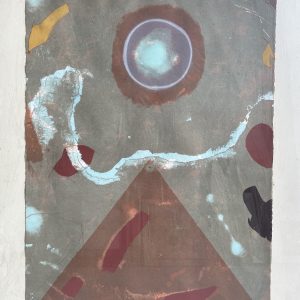
Guinovart’s practice spanned painting, sculpture, and printmaking, evolving from figuration toward a materially rich abstraction. His works incorporate natural and found materials—wood, sand, textiles—evoking Mediterranean landscapes through earthy tones and textured surfaces. At times socially and politically charged, his mature work reflects a deep connection to place while engaging with the broader language of European abstraction.
His work has been exhibited internationally and is held in major collections including the Museo Reina Sofía and MACBA. Since 1994, a significant body of his work has been permanently displayed at the Fundació Espai Guinovart in Agramunt, dedicated to preserving and presenting his artistic legacy.