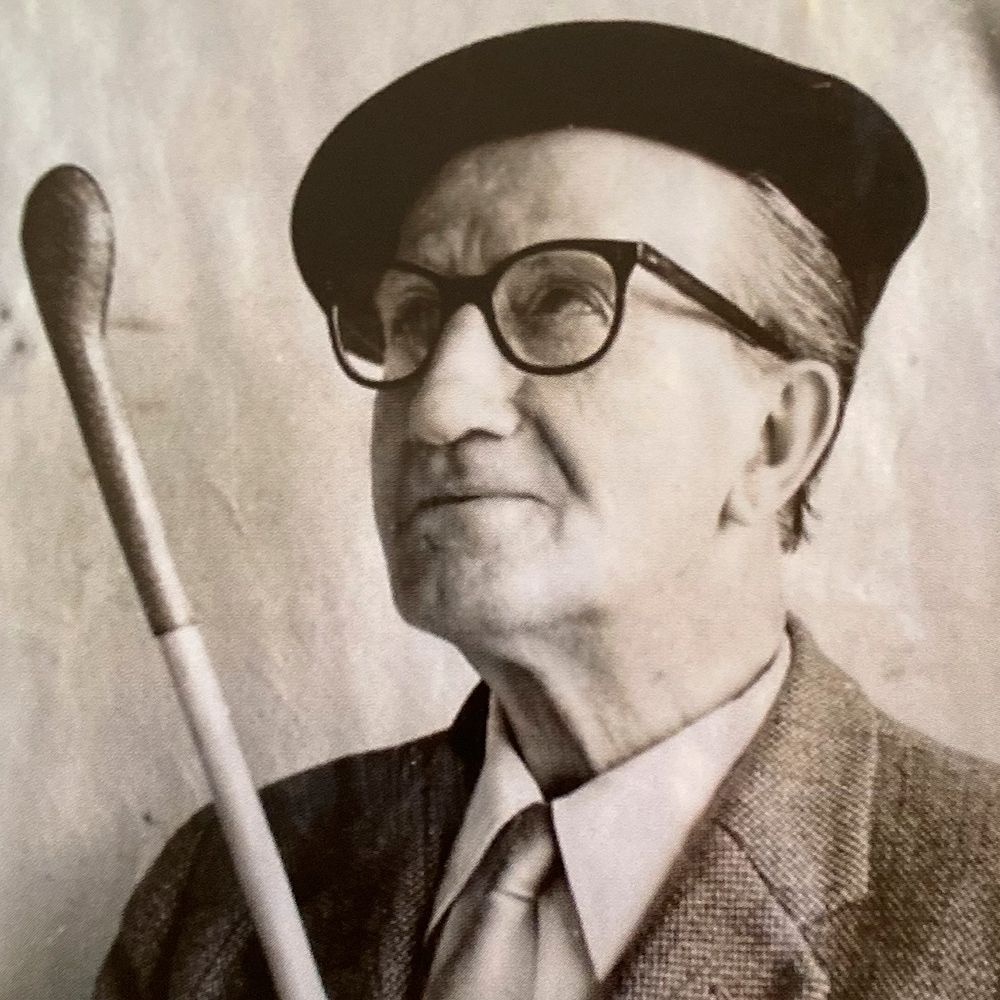
Francisco María Gutiérrez Cossío (1894-1970), better known as Pancho Cossío, was born in San Diego de Baños, Cuba. His family, of Spanish descent, relocated to Cantabria, Spain, in 1898 due to the Cuban War of Independence. Cossío’s early life was marked by a childhood accident that left him with a limp, leading him to explore drawing during his recovery. He studied under Francisco Rivero in Santander before moving to Madrid in 1914, where he trained with Cecilio Pla until 1918.
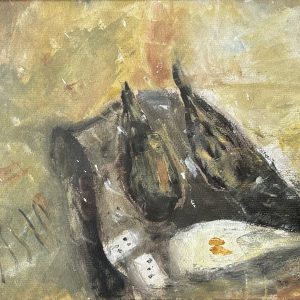
Cossío’s work evolved significantly throughout his career. In the early 1920s, he began to move away from traditional academic styles, developing a bold use of color, particularly in his maritime-themed works. His time in Paris (1923-1932) was a period of intense experimentation with painting techniques, during which he became involved with the School of Paris. This period marked a major turning point in his artistic approach. Upon returning to Spain, he shifted focus toward portraiture and still lifes, eventually revisiting maritime themes in his later years. Cossío’s later works are noted for their transparent and mottled effects, creating an impression of diffused light, which added a distinctive dimension to his art.
The artist´s career was recognized both in Spain and internationally. During his time in Paris, he gained recognition with the support of Christian Zervos, a key figure in the Parisian art world. His works were showcased in several important exhibitions during the 1920s and 1930s, and after his return to Spain, he continued to exhibit widely. Cossío’s contributions to Spanish 20th-century art were honored in 1962 when he received the Honorary Medal at the National Fine Arts Exposition. His works remain an important part of the Spanish artistic heritage.