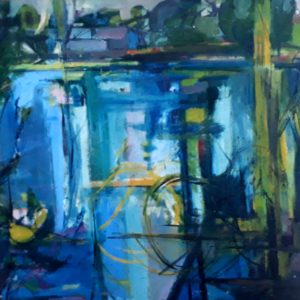
José Palmeiro (1901-1984) was born in Madrid. Raised in a bohemian atmosphere, he worked as a draftsman for the newspaper El Sol at a young age, where his illustrations gained attention. He later moved to Paris in 1925, immersing himself in the city’s vibrant artistic scene, where he formed connections with Spanish artists like Ginés Parra and Óscar Domínguez, and encountered influential figures such as Picasso. Palmeiro’s background is deeply rooted in both Spanish and French traditions, and he developed a unique style influenced by Post-Cubism and French Impressionism, focusing primarily on still lifes, landscapes, and figurative work.
His artistic journey began in the 1930s when he held his first solo exhibition in France and soon became a prominent figure in the Parisian art scene. His early work was deeply influenced by the Spanish avant-garde, and he was involved in the Spanish artists’ circle known as the École de Paris. His artistic style evolved, moving from vibrant depictions of young Spanish women to a more subdued, post-impressionistic and post-cubist approach, focusing on nature, landscapes, and still lifes. He spent seven years in the United States and later settled in South America, where he lived for a decade before returning to France and then Spain. Palmeiro’s work demonstrated a profound sensitivity to color and light, capturing dreamlike landscapes and still-life compositions with an emotional depth that resonated across borders.
Palmeiro’s work has been featured in numerous prestigious exhibitions both in Europe and internationally, with notable solo shows at the Galerie de l’Élysée in Paris and the Museo de Arte Moderno in São Paulo. His works were part of major exhibitions in the École de Paris and represented in various museums, including the Musée d’Art Moderne in Paris, the Musée de La Plata in Buenos Aires, and the Musée des Beaux-Arts in Bordeaux. His pieces also reside in major public collections such as the Musée National d’Art Moderne in Paris and the Kelvingrove Art Gallery and Museum in Glasgow. Palmeiro was recognized for his evocative use of color and the poetic sensibility in his landscapes and still lifes, which were often described as powerful, full of light, and deeply emotional. His legacy endures through his influence on Spanish modernism and his contributions to the international art scene.