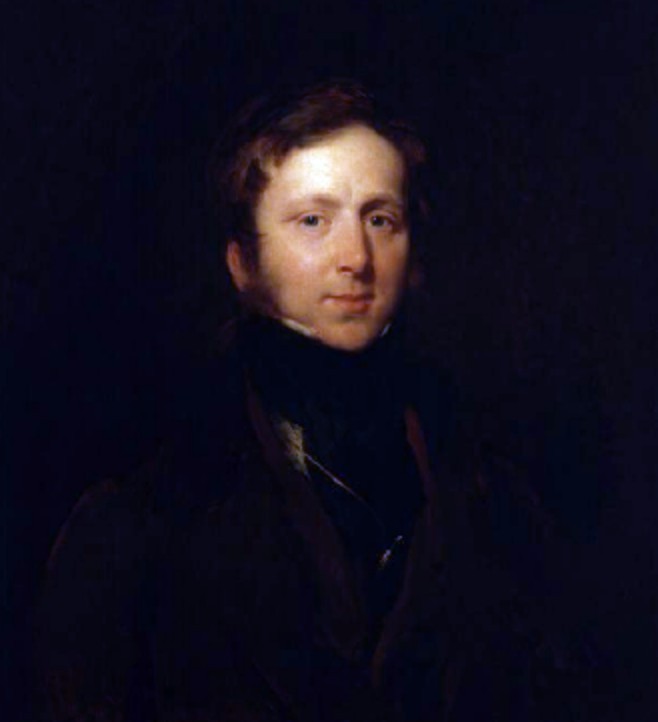
James Duffield Harding (1798–1863) was a British landscape painter, draughtsman, and influential teacher of drawing whose work bridged the traditions of late Romantic landscape and the expanding culture of nineteenth-century printmaking and art education. Renowned for his technical fluency and pedagogical impact, Harding played a central role in shaping how landscape drawing and watercolour technique were taught in Britain and across Europe during the Victorian era.
Born in Deptford, London, Harding was largely self-taught but showed precocious artistic ability from an early age. His father, an artist and decorative painter, encouraged his development, and Harding began exhibiting in London while still a teenager. He first exhibited at the Royal Academy in 1811 and later became a regular exhibitor at major institutions including the British Institution and the Society of Painters in Water Colours (later the Royal Watercolour Society), with which he was closely associated throughout his career.
Harding’s artistic practice focused primarily on landscape, executed in watercolour, oil, and lithography. He travelled extensively in Britain and on the Continent, especially in France, Switzerland, and Italy, producing atmospheric views characterized by fluid handling of tone, expressive line, and an emphasis on natural light effects. His landscapes were less concerned with strict topographical accuracy than with conveying mood and structure, reflecting the broader Romantic sensibility of early nineteenth-century British art.
A defining aspect of Harding’s career was his pioneering use of lithography as both an artistic and instructional medium. At a time when lithography was still gaining acceptance in Britain, he became one of its most accomplished practitioners, producing widely circulated drawing manuals and landscape studies. Works such as Lessons on Trees (1829), Elementary Art (1833), and later instructional publications codified a systematic approach to drawing from nature, emphasizing tonal gradation, compositional balance, and the study of natural forms. These manuals were translated and disseminated across Europe, contributing significantly to his international reputation.
Stylistically, Harding’s work is marked by confident draftsmanship, rhythmic line, and a refined understanding of atmospheric perspective. His tree studies and landscape compositions demonstrate a distinctive synthesis of structural clarity and expressive looseness, often achieved through rapid yet controlled mark-making. Though he worked contemporaneously with major landscape painters such as J.M.W. Turner and John Constable, Harding occupied a slightly different niche, functioning as both practicing artist and authoritative educator in drawing technique.
Harding was elected an Associate of the Society of Painters in Water Colours in 1836 and later became a full member, reflecting his standing within the British watercolour tradition. His works were collected widely during his lifetime and continue to appear in museum and print collections, particularly in institutions holding nineteenth-century British works on paper.
He died in London in 1863, leaving a legacy defined not only by his own landscapes but by his enduring influence on nineteenth-century drawing pedagogy. Today, Harding is regarded as a key figure in the development of instructional art publishing and a major contributor to the dissemination of landscape drawing methods during the Victorian period.