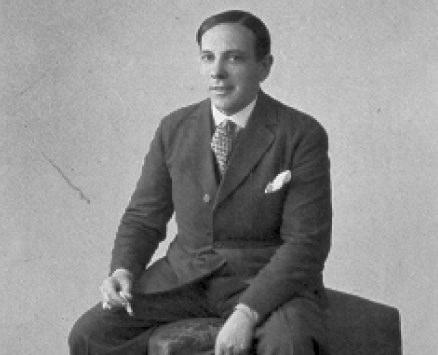
Ismael de la Serna (1898-1968) born in Guadix, Spain. He studied at the Academy of Fine Arts in Granada and later at the San Fernando School of Fine Arts in Madrid. González’s early work was influenced by Spanish intellectuals and artists, and his friendship with poet Federico García Lorca was particularly significant, as he illustrated Lorca’s first book, Impresiones y Paisajes, in 1918. González spent most of his life in Paris after 1921, where he became part of the avant-garde Spanish School of Paris and was influenced by Cubism, particularly through his relationships with artists like Pablo Picasso and Juan Gris.
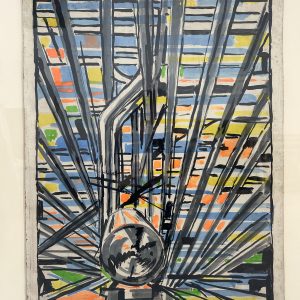
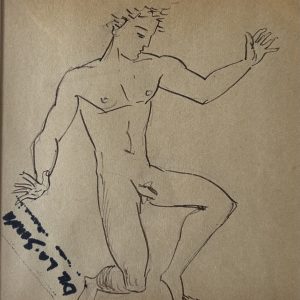
González’s work evolved from neoclassical forms to a more Cubist style, influenced by Georges Braque and Pablo Picasso. While rooted in Cubism, González’s paintings remained unique due to his fondness for color, influenced by the French Impressionists like Cézanne and Pissarro. Over time, he moved toward more abstract forms, reducing images to their essence, often to a mere outline, exploring the core of the painting. His work reflects a blend of Cubism, Expressionism, and Surrealism, although he never fully aligned with any one movement, instead integrating elements that suited his artistic goals. He spent much of his later life focusing on finding “the essence and the ultimate goal of painting,” a journey that led him to increasingly minimalistic and abstract works.
González exhibited widely in the 1920s, with a major exhibition organized by art dealer Paul Guillaume. This exhibition led to notable showings at the Musée du Jeu de Paume in Paris in 1936 and at the Spanish Pavilion of the 1937 Paris International Exhibition. In the years following, he had successful solo exhibitions in cities such as Berlin and Mexico, and a retrospective at the Tate Gallery in London in 1963. His legacy was celebrated posthumously with a retrospective at the Museum of Modern Art in Paris in 1968.