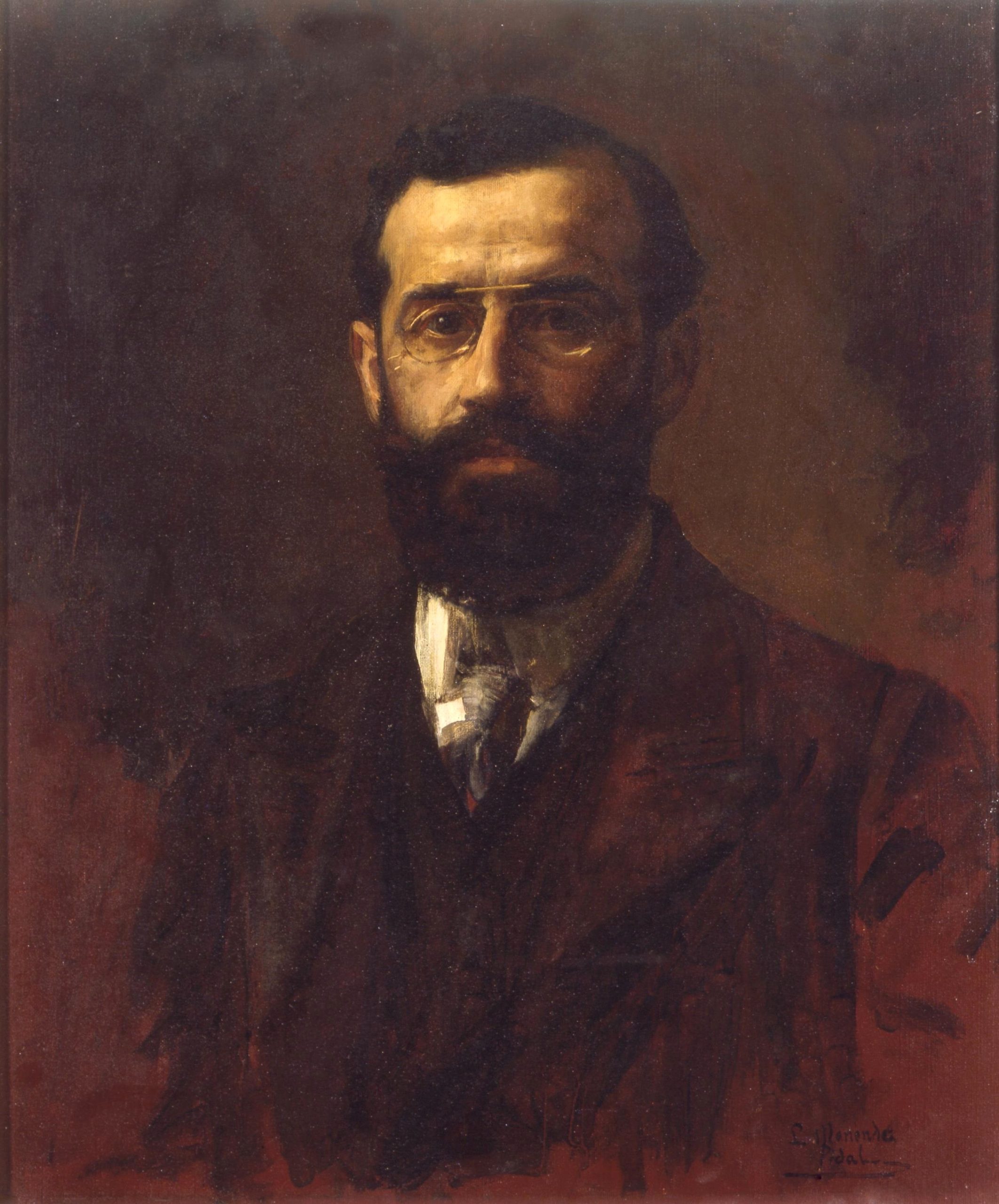
Luis Menéndez Pidal (1861-1932) was born in Pajares, Asturias. He was a notable Spanish painter and educator with significant influence on Asturian and Spanish art during the late 19th and early 20th centuries. Menéndez Pidal pursued formal training at the Escuela de Bellas Artes de San Fernando in Madrid and continued his studies in Rome under prominent artists such as Francisco Pradilla. He later became a professor and influential figure in Spanish academic circles, teaching at the Escuela Superior de Artes Industriales and the Escuela de Artes y Oficios in Madrid.
The artist is known for his realist style, primarily focusing on genre painting and portraiture. His works often depict everyday life and human emotions, with an emphasis on rural customs and scenes. In addition to genre scenes, he explored religious themes, such as his well-known frescoes on the dome of the Chapel of San Francisco el Grande in Madrid. Menéndez Pidal’s realist approach reflects a blend of detailed human depictions with an often muted color palette, creating emotional depth.
His work has been showcased in numerous exhibitions, both in Spain and internationally. He earned prestigious awards, including medals at Spain’s National Exhibition of Fine Arts and a gold medal at the 1900 International Exposition in Munich. Some of his notable works, such as Salus infirmorum and Un éxtasis de San Francisco, remain on display at institutions like the Museo del Prado.