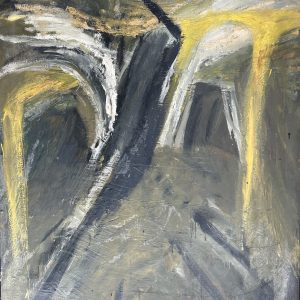
Carlos Vidaurre (1929–1998) was a visual artist who lived through and was shaped by the monumental political and cultural shifts of the 20th century. Born in 1929, he grew up during the turbulent 1930s, a period marked by the global struggle between political ideologies such as socialism, democracy, and fascism. These societal changes, alongside the economic impacts of the Great Depression, formed the backdrop against which Vidaurre’s artistic sensibilities were nurtured.
Vidaurre’s work reflects a deep engagement with the themes of his era. Influenced by the social consciousness that emerged during the 1930s, his art often explored themes of inequality, resilience, and the human condition. While his style incorporated elements of magic realism inspired by Surrealism, he was also attuned to the political nuances of the time, echoing the narrative-driven works of artists like Diego Rivera and Frida Kahlo. Vidaurre’s art served as a reflection and critique of the world around him, capturing the tension between societal struggles and personal expression.
Exhibitions of Vidaurre’s works were primarily held in his native region and across Europe, where he contributed to the post-war artistic dialogue. While less internationally renowned, his oeuvre remains a testament to the resilience and adaptability of art during times of global upheaval. His legacy bridges the political and personal, encapsulating the spirit of a century marked by both conflict and creativity.