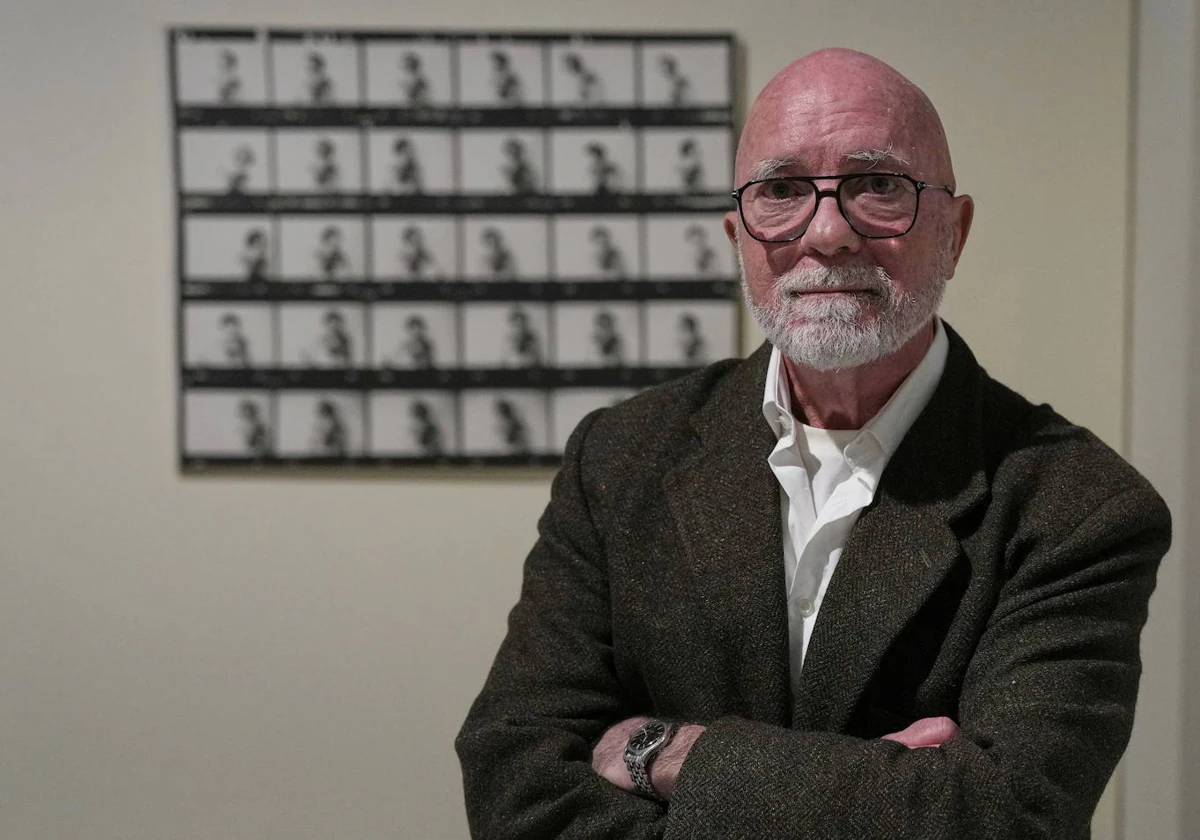
Ferran García Sevilla (1949) was born in Palma de Mallorca, Spain. He moved to Barcelona in 1969 to study Art History and Modern and Contemporary History, where he settled permanently. In the 1970s, he began his artistic journey in the realm of conceptualism, experimenting with various disciplines such as video and photography. His career took a significant turn in the 1980s when he became one of the most important figures in European painting. García Sevilla was particularly influenced by artists such as Albert Ràfols-Casamada, Antoni Tàpies, and Joan Miró.
García Sevilla’s early work was heavily influenced by conceptualism, exploring the function of art and its consumption through mediums like video and photography. In the 1980s, his painting became prominent, marked by the use of drips and rapid brushstrokes that reflected a distinctive primitivism. His works often combined elements of abstraction with everyday objects and ironic phrases, making his art a playful commentary on visual language. In the early 1990s, García Sevilla expanded his imagery to include parts of the human body, developing a more introspective approach.
García Sevilla’s works have been showcased in major exhibitions worldwide. He participated in the 1986 Venice Biennale and the 1987 Documenta in Kassel. He has exhibited at prominent museums such as the Fondation Cartier in Paris, the IVAM in Valencia, the Malmö Konsthall in Sweden, the Museo Nacional Centro de Arte Reina Sofía in Madrid, and the Irish Museum of Modern Art in Dublin. His works are part of prestigious public and private collections, including the Museo Nacional Centro de Arte Reina Sofía in Madrid, the Museu d’Art Contemporani de Barcelona, Fundació “la Caixa” in Barcelona, Fundação Serralves in Oporto, and the Centre Pompidou in Paris.