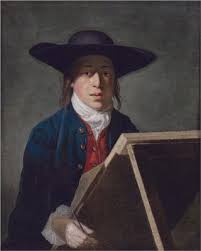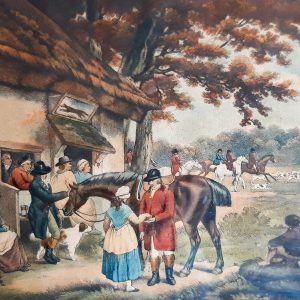
George Morland (1763–1804) was a British painter celebrated for his vivid depictions of rural life, animals, and sporting scenes in late 18th-century England. Born in London on 26 June 1763, he was the son of the artist and art dealer Henry Robert Morland, and showed precocious talent from an early age—exhibiting drawings at the Royal Academy by just ten years old.
Trained initially by his father, Morland developed into a prolific and highly popular painter, known for his naturalistic portrayals of rustic subjects: farmyards, inns, hunts, smugglers, and coastal life. His work drew inspiration from 17th-century Dutch and Flemish painting, combining careful observation with a picturesque sensibility.
Morland’s paintings were widely disseminated through engravings, which brought his imagery to a broad audience and cemented his reputation during his lifetime. He exhibited regularly at the Royal Academy from the 1780s onward, and his most accomplished works are generally dated between about 1790 and 1794.
Despite his artistic success, Morland led a turbulent personal life marked by financial instability and heavy drinking. He was frequently in debt and often worked rapidly to satisfy creditors, producing an enormous body of work—hundreds of paintings and over a thousand drawings.
He died on 29 October 1804 at the age of 41. Today, Morland is regarded as a key figure in British genre painting and sporting art, admired for his lively compositions and enduring vision of the English countryside.