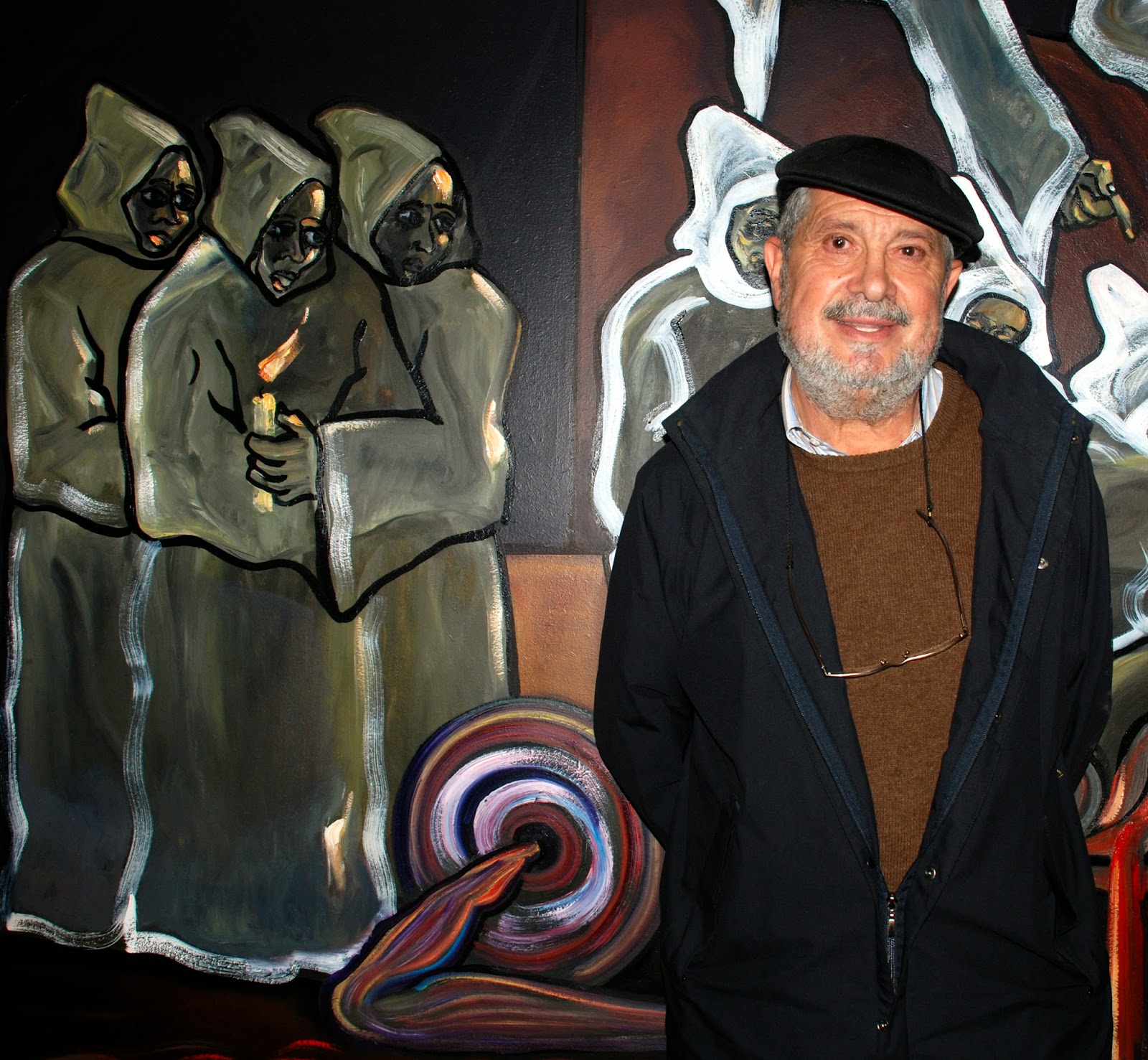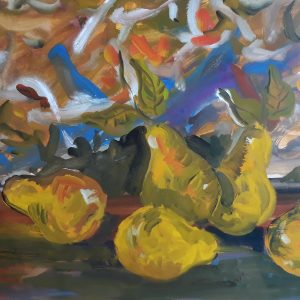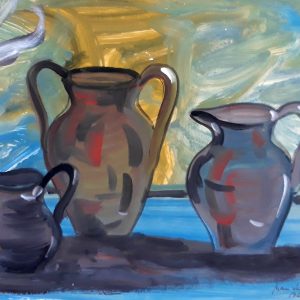
Juan Vallejo (1949-2023) was born in Burgos, Spain. From a young age, Vallejo was deeply committed to the defense of democracy and freedom, which he carried into his work throughout his life. He began painting early, often using limited resources, and by the age of 18, he had already held his first solo exhibition at the Arco de Santa María in Burgos. His personal life was marked by a strong social commitment, and he became known for his critical stance against the political elite in his hometown, which eventually led to his self-imposed exile. He lived in Paris and Rome, where he further developed his artistic practice across various disciplines.
His artistic career was deeply intertwined with his social and political convictions. He often used his art as a means of protest and commentary, such as when he created the monumental painting El golpe, which captured the tension and division surrounding the 1981 attempted coup in Spain. His work also included religious and mystical themes, seen in his commissions for places like the Monastery of San Pedro Cardeña and the Benedictine Monastery of Santo Domingo de Silos, where he explored the transcendent through his artistic lens. Despite facing ideological censorship in his hometown, Vallejo’s later work earned him recognition, and he continued to be an important cultural figure in Burgos, where he held exhibitions and engaged in public debates.
Throughout his life, Vallejo’s work was exhibited both nationally and internationally. He received recognition for his involvement in various social projects and artistic initiatives, including workshops in the Burgos prison. His commitment to his hometown and his belief in the transformative power of art culminated in his final exhibition in June 2022 at the Arco de Santa María, where he paid tribute to the 800th anniversary of the Burgos Cathedral. Vallejo’s legacy endures through his evocative paintings and his tireless pursuit of social justice, leaving an indelible mark on the cultural landscape of Spain.