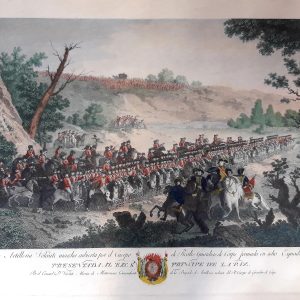
Asensio Julià i Alvarracín (1760 – 1832), known as “El Pescadoret,” was a Spanish painter and engraver whose career was closely entwined with that of Francisco de Goya. His style represents a bridge between the disciplined Neoclassicism of the Real Academia de San Carlos and the atmospheric intensity of the Goyaesque circle.
Technically, Julià’s work is marked by a mastery of line and a sophisticated use of tonal washes, likely refined during his tenure as a teacher and later Director of the Escuela Real de la Merced. His ability to capture complex military movements and historical narratives with academic precision allowed him to serve as a vital collaborator to Goya, particularly during the execution of the frescoes in St. Anthony of La Florida.
Julià’s trajectory is defined by high-level institutional roles and a legacy that was, for decades, absorbed by the fame of his mentor, leading to major works like The Colossus being debated as his own. His work has been featured in major exhibitions at the Museo del Prado and a 2010 retrospective by the Ministry of Culture of Valencia.