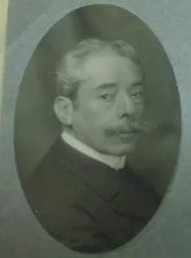
Manuel Villegas Brieva (1871-1923) was a painter born in Lleida, Spain. He developed a passion for art early on, studying at the School of Fine Arts in Granada before moving to Madrid to continue his training at the Royal Academy of Fine Arts of San Fernando. His artistic journey was further shaped by his studies in Rome, thanks to a scholarship from the Diputación de Córdoba. He later settled in Madrid, where he became a professor at the School of Arts and Crafts, forming connections with fellow artists and cementing his place in the Spanish art scene.
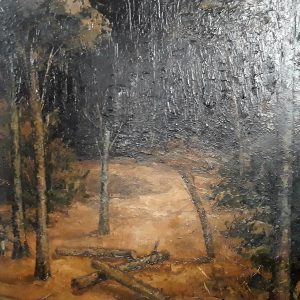
Throughout his career, Villegas Brieva produced works that combined elements of both Impressionism and Realism. He was especially known for his ability to capture the effects of light and the nuances of everyday life, often painting landscapes, historical scenes, and portraits. His brushwork was fluid, and his vibrant use of color reflected the influences of contemporary movements while maintaining his focus on realistic depictions. His paintings convey a sense of immediacy, drawing the viewer into intimate moments of daily life.
The artist’s career was marked by several prestigious exhibitions and awards. He won the second medal at the National Exhibition of Fine Arts in 1892 for his painting ¡A la guerra! and received further accolades in 1895 and 1920. In 1910, he co-founded the Spanish Association of Painters and Sculptors alongside Joaquín Sorolla and Aureliano de Beruete, playing a key role in the promotion of Spanish art. His works were featured in the 1910 Spanish Art and Decorative Industries Exhibition in Madrid and were later displayed in Mexico. His legacy lives on through his works, held in private collections and museums such as the Prado Museum in Madrid.