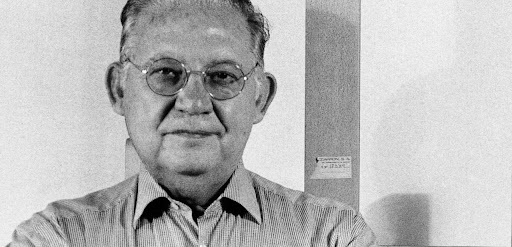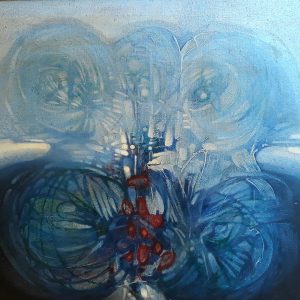
Vicente Vela (1931–2015) was a Spanish artist born in Algeciras, Cádiz, and passed away in Madrid. Known for his distinctive contributions to post-war art, Vela’s career spanned several decades, with significant recognition both in Spain and abroad. His work, primarily in painting, made a lasting impact in the Spanish art scene, and his life’s journey intertwined with the cultural evolution of the 20th century. Vela was not only an accomplished artist but also collaborated with major fashion houses, leaving a legacy that bridged art and design.
His artistic career began in the mid-20th century, marking him as part of the post-war Spanish artistic movement. He participated in prestigious exhibitions, including the Venice Biennale in 1958 and the Biennale de São Paulo, where he showcased his unique approach to abstraction. Over the years, his work was frequently exhibited in major international venues, particularly in Italy, Spain, and France. Vela’s artistic expression evolved through his involvement in various group shows, including the influential 33rd Venice Biennale in 1966, and he was also a regular presence at La Biennale di Venezia. Not only did he exhibit his paintings, but his artistic endeavors extended to collaborations in the world of design, where he created iconic visuals, such as the famous “crab” logo for Loewe.
Vela’s works have been included in major exhibitions, such as “Diseño en España” at the Museo Nacional Centro de Arte Reina Sofía in Madrid. His art is part of the permanent collection at the Museu D’Art Contemporani Vicente Aguilera Cerni in Vilafamés. He was involved in several high-profile biennials, including the Venice Biennale National Pavilion and Biennale de Paris. His impact reached beyond the gallery world, influencing the fashion industry with his collaborations, most notably with the luxury brand Loewe. Vela’s paintings have gone up for auction numerous times, and his legacy is cemented not only through exhibitions but through his lasting influence on both the art and design communities.