
Spanish Expressionism & Psychological representation
In the decades following the dominance of abstraction, a generation of Spanish painters re-engaged the human figure as a space of psychological and existential inquiry. Rather than returning to descriptive realism, these artists embraced distortion, symbolic imagery and charged pictorial atmospheres, aligning Spanish painting with broader European neo-expressionist currents while retaining a distinct cultural and historical sensibility.
In the work of Víctor Mira, figuration becomes gestural and emblematic, oscillating between intensity and introspection. Eduardo Naranjo approaches the image with meticulous precision, transforming realism into a vehicle for psychological depth. Across different generations, these painters navigate the tension between representation and abstraction, constructing images in which the figure operates as both presence and metaphor.
This selection traces a sustained commitment within Spanish post-war and contemporary painting to the expressive potential of figuration, where memory, identity and inner experience converge on the canvas.
Featuring: Víctor Mira, Eduardo Naranjo, Chema Cobo, Jorge Castillo, Santiago Ydáñez.

FEATURED WORKs
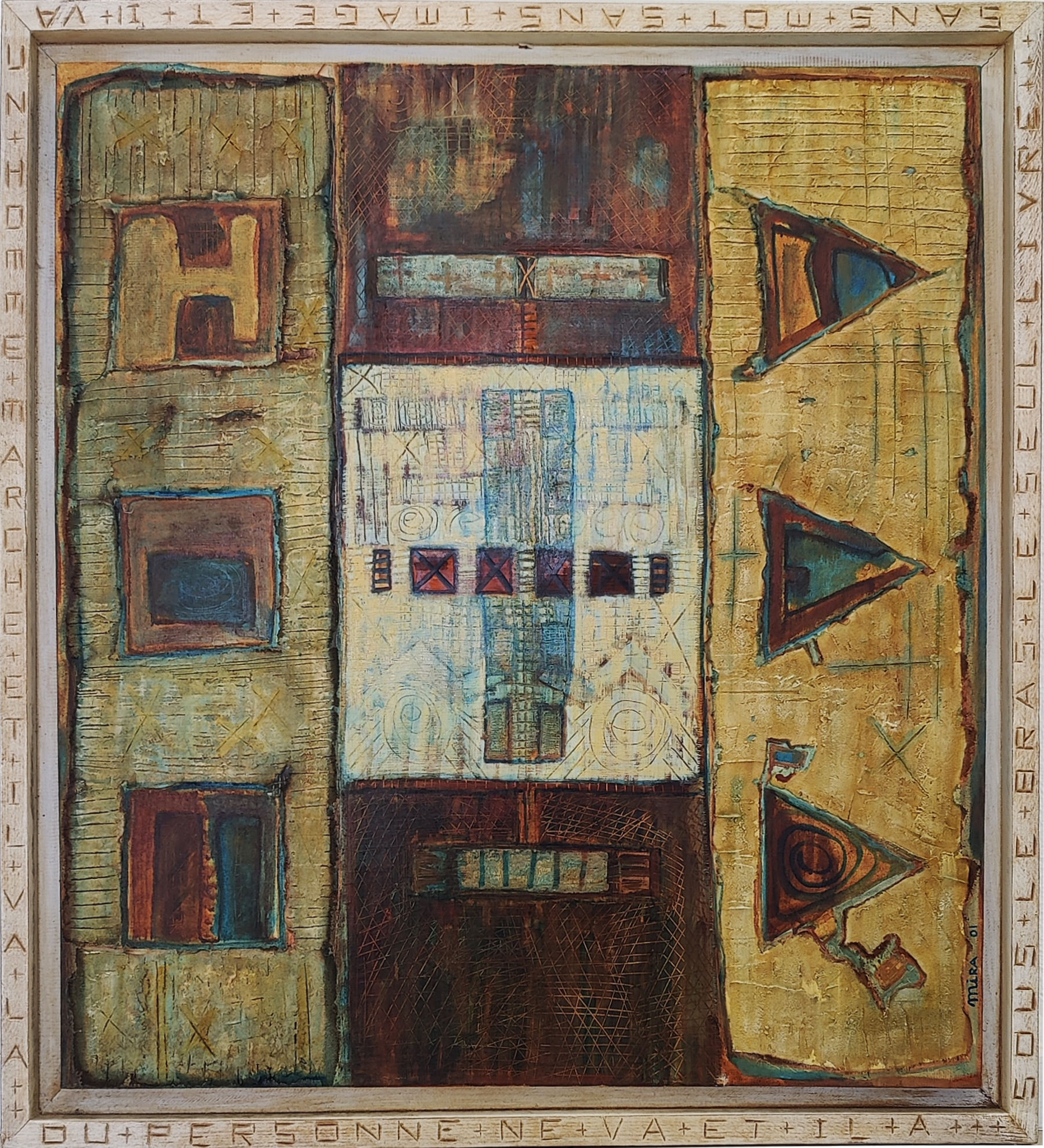

Victor Mira
Untitled
Mixed media on canvas
89 x 95 cm
2001
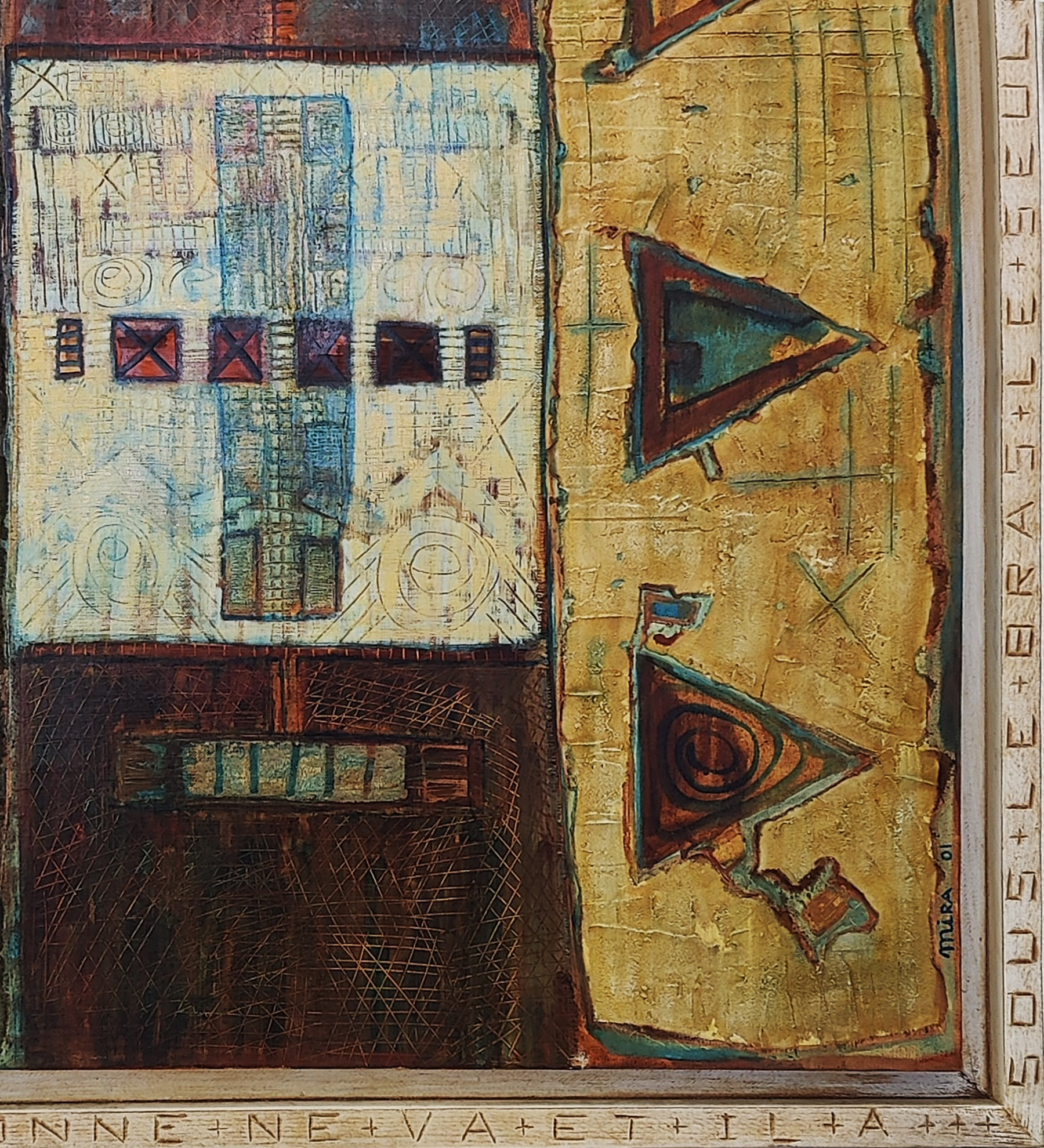
The composition by Víctor Mira stands out for its abstract composition, inviting personal interpretation. Through the layering of different elements and textures, Mira creates a visual universe that provokes a reflective response in the viewer. The use of mixed media in this particular piece demonstrates his versatility and willingness to experiment with different materials and techniques. The geometric forms likely represent the artist´s interest in abstraction and his ability to convey complex ideas through simplified shapes. This approach aligns with his broader artistic vision, which often sought to bridge the gap between figurative and abstract art. The use of geometry symbolizes order amidst chaos, a recurring theme in Víctor Mira´s work.


Jorge Castillo
Untitled
Oil on canvas
81 x 65 cm
The gouache on paper work by Jorge Castillo, allows him to create bold, flat areas of color that can easily be layered and manipulated to create the illusion of separate elements pieced together. This technique might be seen as a nod to his early training in technical drawing, combined with the freedom of expression he cultivated as a self-taught artist. The intentional mimicry of collage in a painted medium could be interpreted as a commentary on the nature of perception and reality, themes often explored in Surrealist art. It might also represent Castillo’s synthesis of various artistic influences and experiences, reflecting his time in different countries and exposure to diverse artistic traditions.
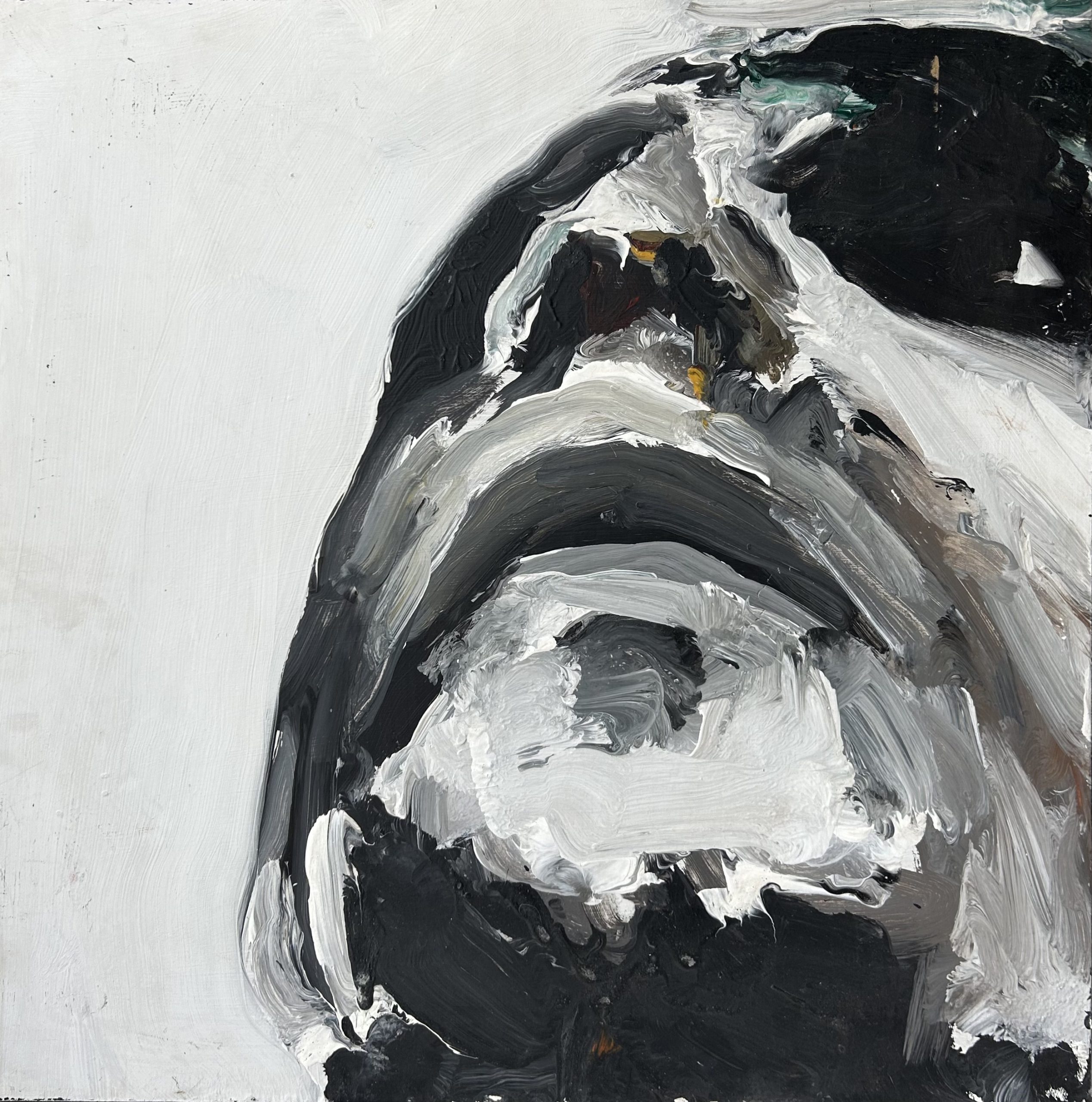
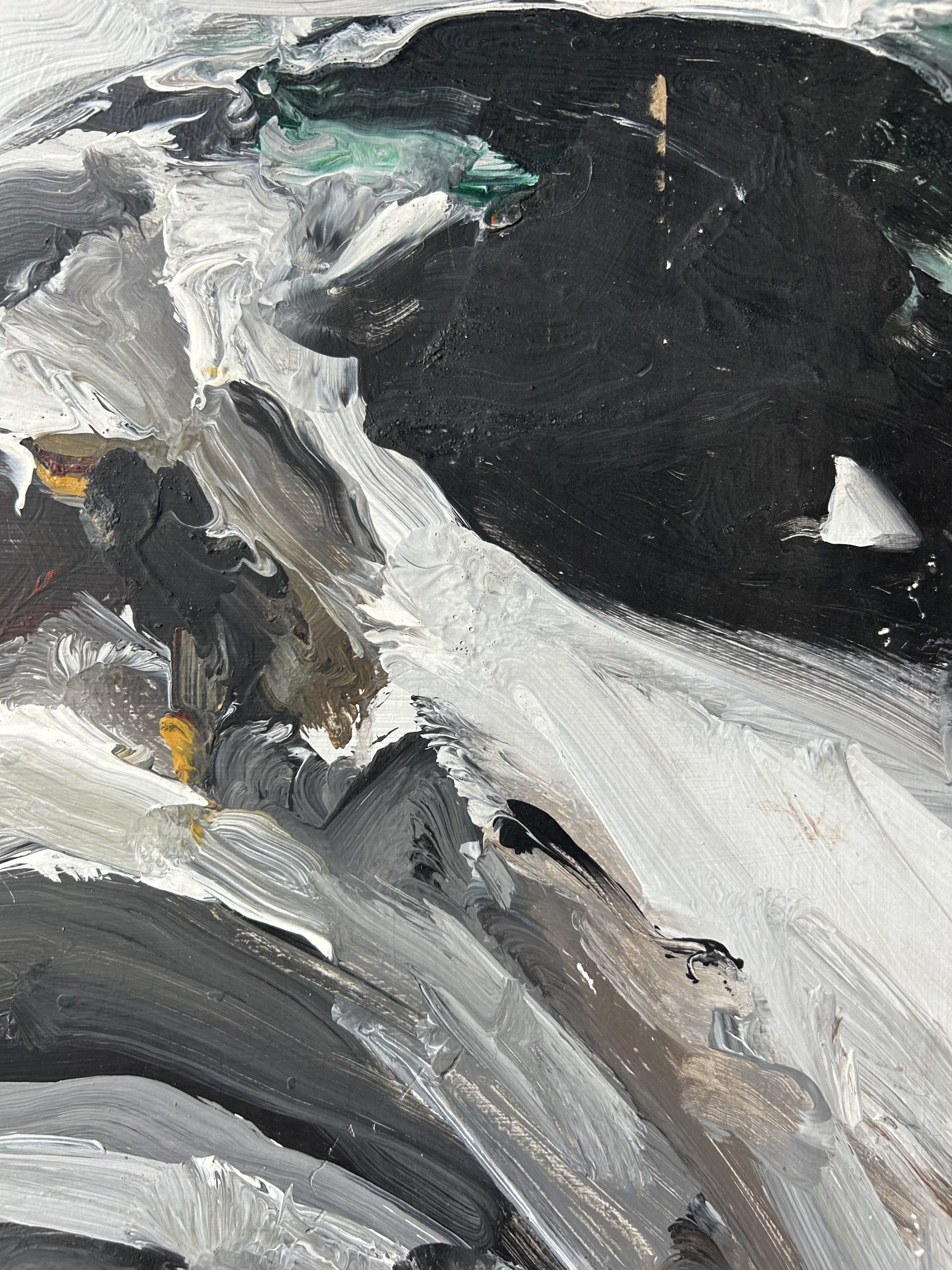
Santiago Ydáñez
Untitled
Acrylic on board
60 x 60 cm
2002
The work stands as a testament to Santiago Ydáñez’s evolving exploration of the human figure as a profound vehicle for expressing universal emotions. Through the use of soft gray tones, applied with his signature gestural technique, Ydáñez creates an ethereal, almost otherworldly atmosphere that invites deep contemplation. The subtle, fluid application of paint allows the viewer to engage with the work not just visually, but emotionally, as the human form becomes a conduit for complex, universal feelings. Ydáñez transcends the purely aesthetic, creating a visual experience that challenges the viewer to reflect on the psychological and emotional dimensions of the work, fostering a sense of connection that goes beyond the surface.


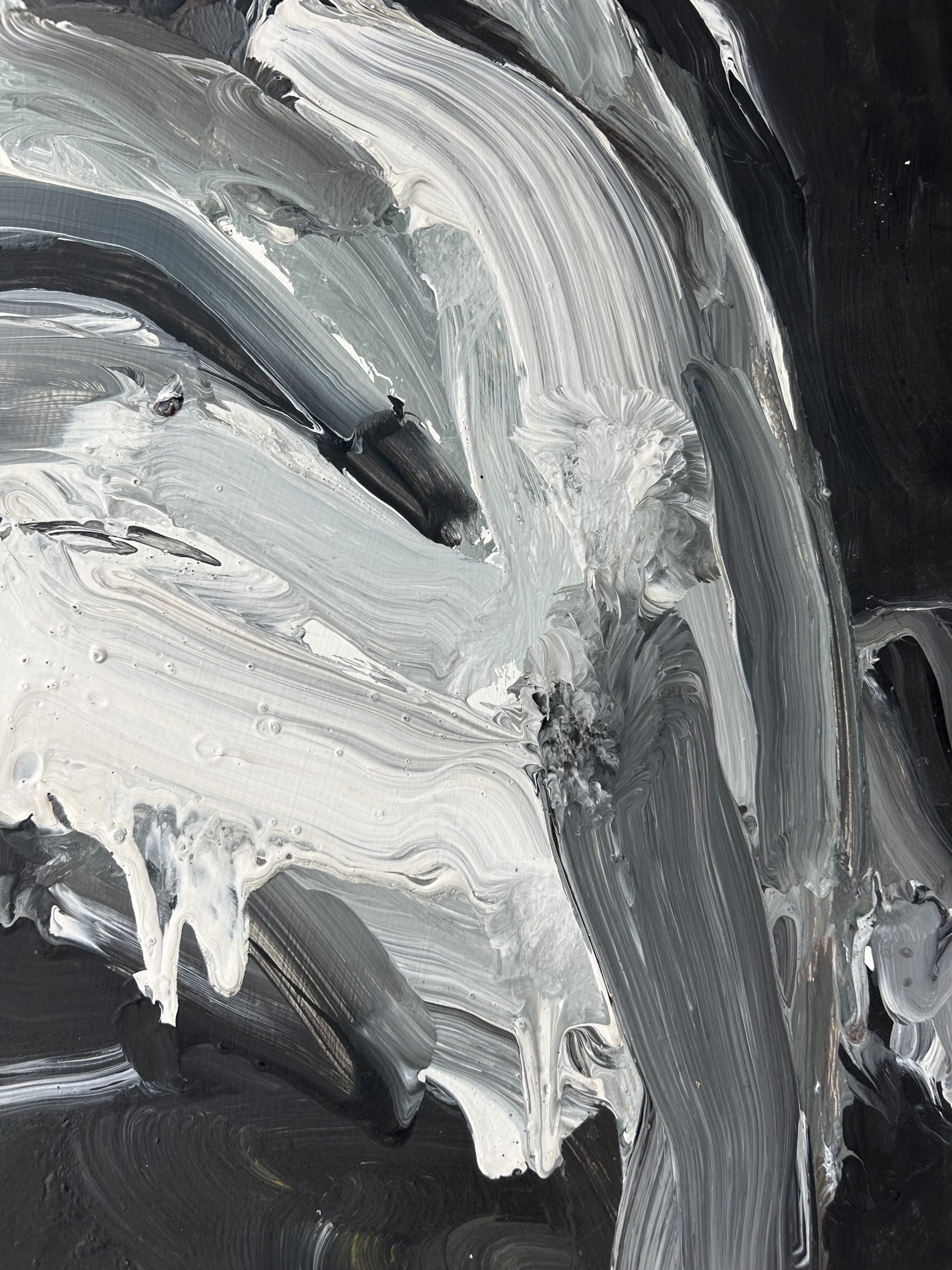
Santiago Ydáñez
Untitled
Acrylic on board
60 x 60 cm
2002
The painting captures Santiago Ydáñez’s profound fascination with the complexity of facial expressions and the raw intensity of human emotion. With his gestural and energetic technique, Ydáñez creates a portrait that goes beyond simple representation, offering an intimate exploration into the psychological depth of the subject. The dramatic interplay of deep blacks and nuanced grays enhances the sense of contrast and tension, while the subject’s posture adds a layer of mystery and introspection. These elements, recurring throughout Ydáñez’s work, invite the viewer to engage with the emotional and psychological undercurrents that inform the painting, creating a compelling connection between the subject and the viewer. Through this evocative approach, Ydáñez delves into the essence of human expression, using the portrait not just as a likeness, but as a powerful narrative of inner turmoil and reflection.
Chema Cobo
Untitled
Pastel on paper
92 x 72 cm
1985
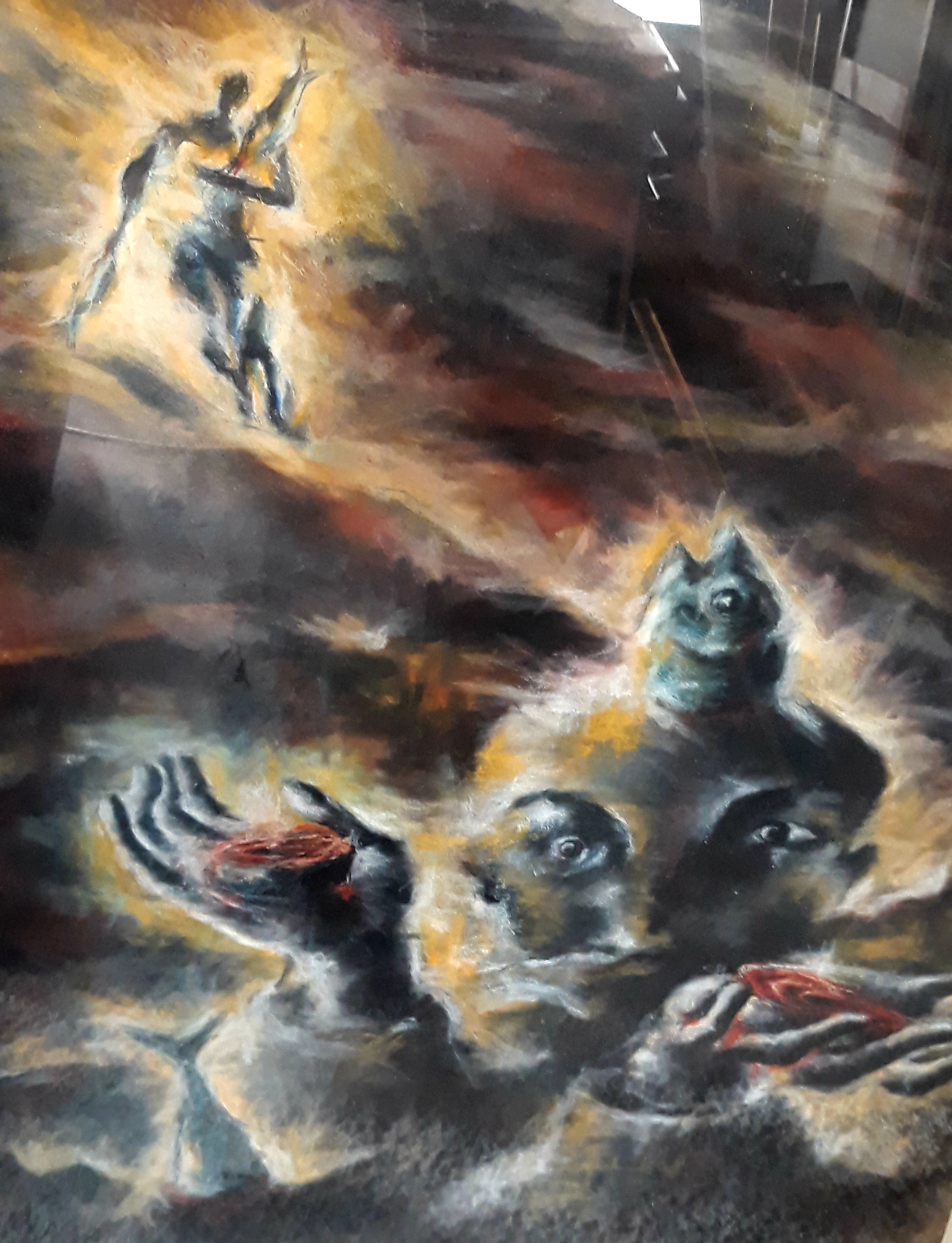
In this Chema Cobo’s artwork, made in 1985, the pastel technique allows for a striking interplay of texture, light, and shadow, which breathes life into the figures and their dynamic interactions. The high contrast of black and yellowish tones speaks to the artist’s mastery of contrasting emotions and energy. This technique aligns with Cobos’ broader focus on the human form and relationships, often exploring tension and intimacy. His work invites viewers to connect with the rawness of human experience, capturing fleeting moments with both softness and intensity.
Eduardo Naranjo
The Creation Series
Ink engraving on paper
91/225
35´5 x 27 cm
1984
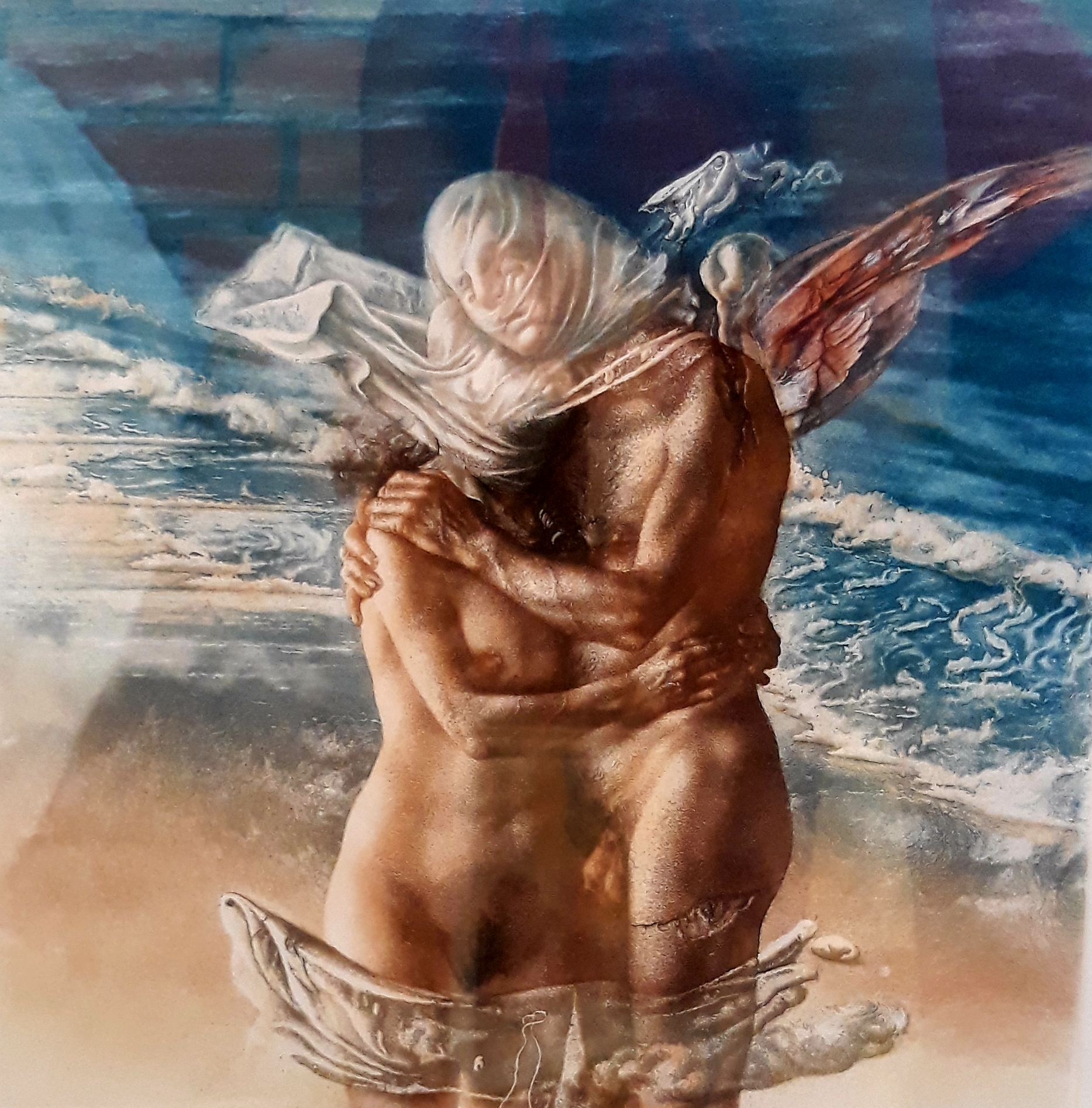
In this work by Eduardo Naranjo, the artist’s mastery of hyperrealism is on full display. The scene, seemingly suspended in a dreamlike moment, features a tender yet enigmatic embrace between a man and woman. Their faces, partially obscured by a veil, evoke a sense of mystery, shrouding their identities in ambiguity. This gesture—of covering—suggests Naranjo’s recurring exploration of the delicate boundary between what is seen and what is hidden, drawing the viewer into the psychological depth of the moment. This piece exemplifies Naranjo’s talent for blending the hyperreal with the surreal, inviting the viewer to confront the inner worlds of his subjects, their quiet moments of introspection, and their connection to the surrounding world. It’s a poetic exploration of intimacy, the passage of time, and the unseen forces that shape human experience—qualities that define his broader artistic practice.

Eduardo Naranjo
The Creation Series
Ink engraving on paper
91/225
35´5 x 27 cm
1984
In this ink engraving by Eduardo Naranjo, the artist combines elements of surrealism and hyperrealism to create a profound and enigmatic scene. A woman, depicted in a vulnerable and passive pose, stands with her back to the viewer, seemingly unaware or unwilling to face what lies ahead. The structure that divides the sea in the composition acts as both a literal and metaphorical path, perhaps representing an inevitable journey or transformation that the woman must confront. Naranjo’s signature attention to detail imbues the image with a sense of tension and anticipation, as if the moment is frozen just before an unknown event. The surrealistic quality of the scene, with its otherworldly atmosphere, speaks to Naranjo’s exploration of psychological depth and emotional complexity, reflecting the internal struggle between acceptance and resistance.
Eduardo Naranjo
The Creation Series
Ink engraving on paper
91/225
35´5 x 27 cm
1984
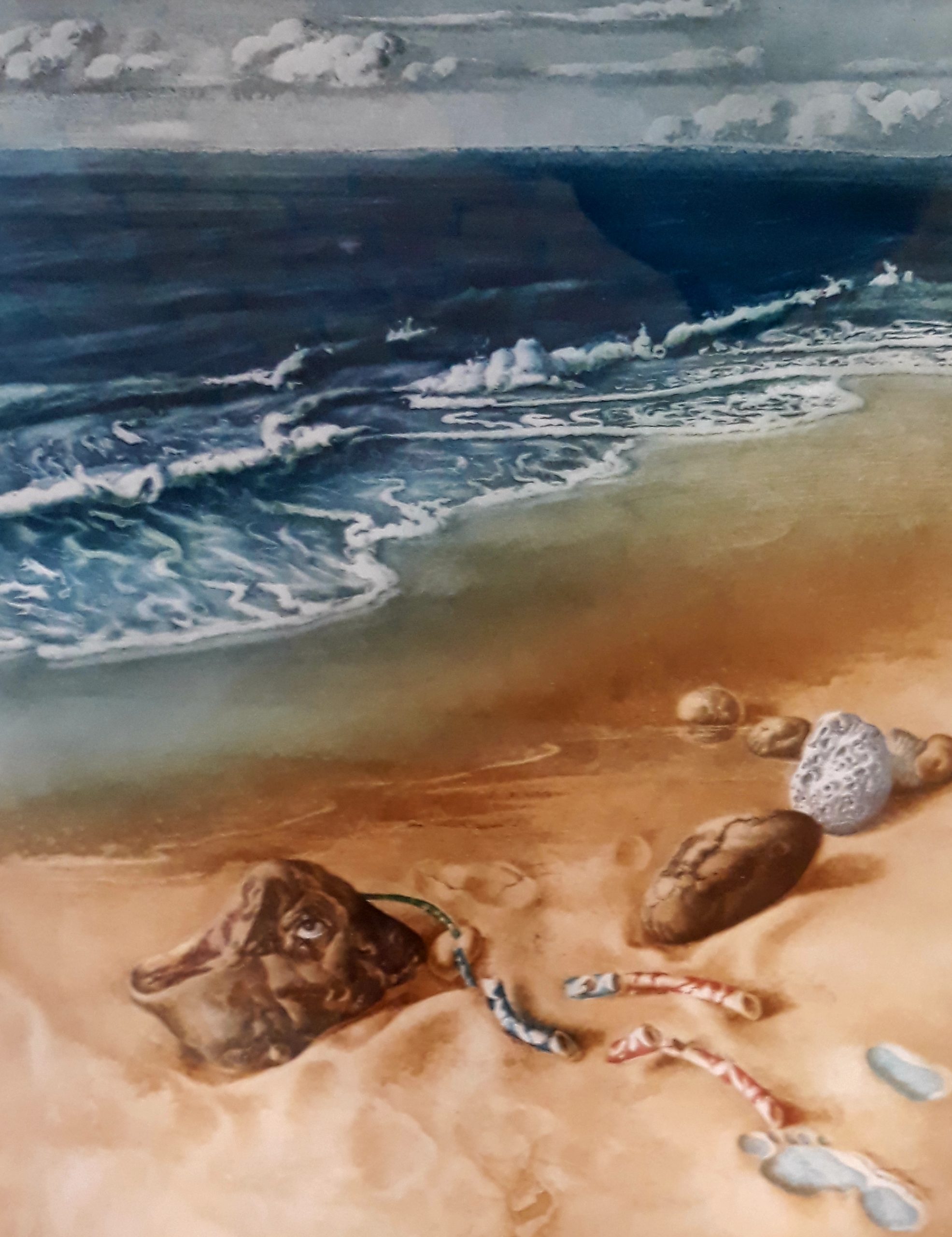
In this ink engraving by Eduardo Naranjo, the artist presents a beach scene with the precision and clarity characteristic of his hyperrealistic style. While the elements of the natural world—the sand, the water, and the sky—are rendered in painstaking detail, Naranjo’s surrealistic touch subtly transforms the scene, imbuing it with an almost dreamlike quality. The beach, often a symbol of transition and the boundary between land and sea, becomes a liminal space in his work, where reality is slightly distorted and charged with introspective meaning.

Eduardo Naranjo
The Creation Series
Ink engraving on paper
91/225
35´5 x 27 cm
1984
Eduardo Naranjo’s Ink Engraving (1983) is a striking example of his mastery in blending surrealism with hyperrealism. In this piece, the artist weaves together dreamlike, introspective imagery, allowing for an exploration of the boundary between the real and the imagined. The warm, earthy tones that dominate the composition evoke a sense of grounded, organic presence, while the fine detailing and precision of his technique invite viewers to engage in a deeper, almost meditative experience. The interplay of light and shadow within the work is characteristic of Naranjo’s dedication to capturing texture and atmosphere, which pulls us into a world where the ordinary is imbued with otherworldly qualities. His careful rendering of each element suggests a deeper, symbolic connection, transforming everyday objects into vessels for reflection and contemplation.

Eduardo Naranjo
The Creation Series
Ink engraving on paper
91/225
35´5 x 27 cm
1984
Eduardo Naranjo’s Ink Engraving (1984) invites the viewer into a surreal, almost otherworldly landscape, where reality and imagination converge. The artist’s use of rich earth tones and intricate detail creates a layered composition, where each area feels like a distinct yet interconnected realm, reflecting his fascination with the unseen and the mysterious. The composition evokes a sense of exploration, as though stepping into a space inhabited by unknown creatures, where the boundaries between the familiar and the fantastical dissolve. Naranjo’s meticulous rendering imbues each element with a sense of depth, inviting contemplation on the hidden complexities of nature and the surreal undercurrents that define his unique artistic vision.
Eduardo Naranjo
The Creation Series
Ink engraving on paper
91/225
35´5 x 27 cm
1984
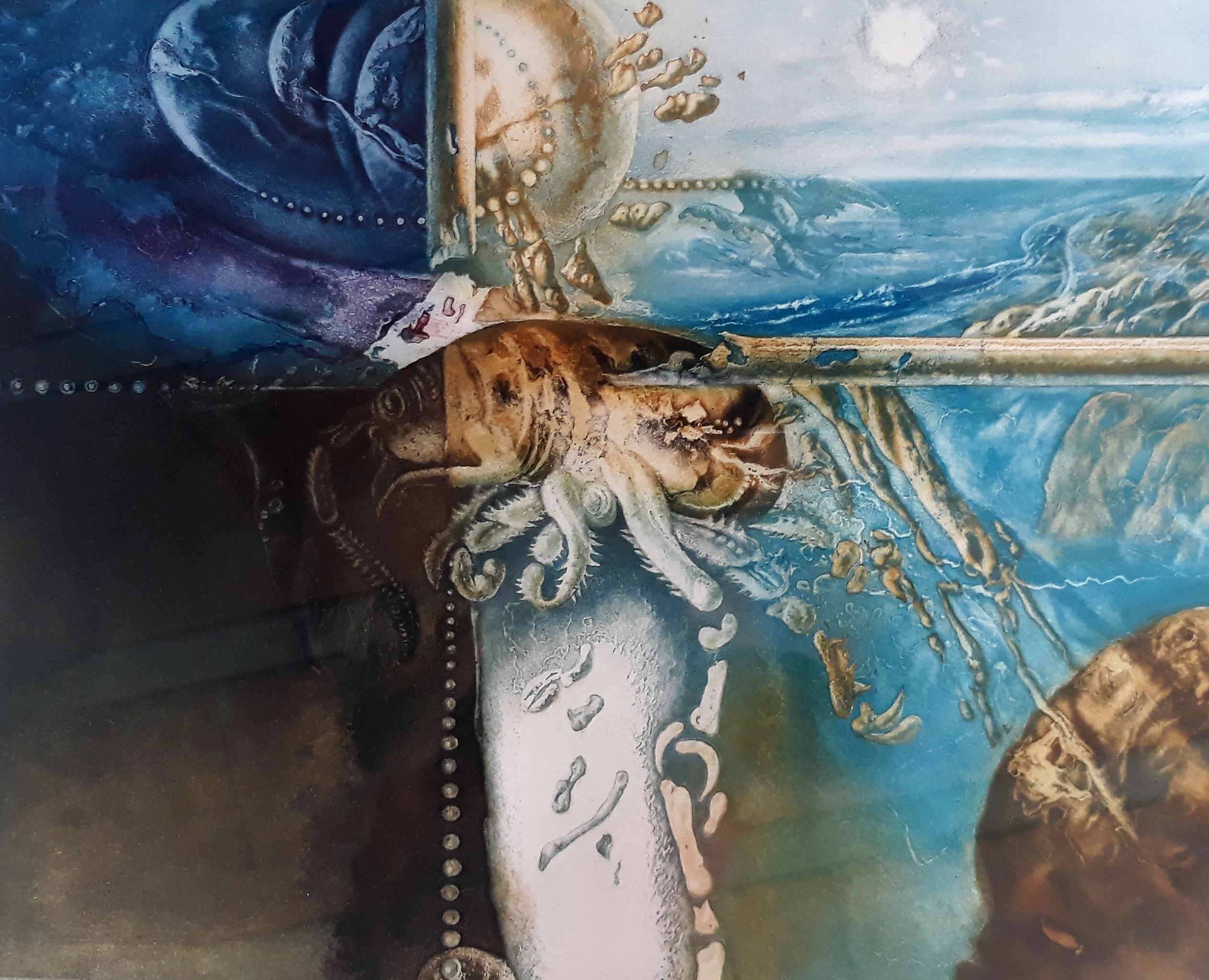
In this untitled ink engraving by Eduardo Naranjo, the artist blends the surreal and the hyperreal to evoke a dreamlike scene inspired by the sea. Though abstract in nature, the work hints at the power and fluidity of water, with elements of the sea represented in a manner that feels both tangible and ethereal. Naranjo’s meticulous attention to texture and light is evident in the way he captures the subtle movement and depth of the ocean, transforming the familiar into something mysterious and introspective. The piece reflects Naranjo’s ongoing exploration of the inner landscapes of the human experience, using natural elements as metaphors for emotional and psychological states. The sea, often a symbol of the subconscious, becomes a space for reflection and contemplation, inviting the viewer to engage with the complexities of both the external world and the mind.
Eduardo Naranjo
The Creation Series
Ink engraving on paper
91/225
35´5 x 27 cm
1984
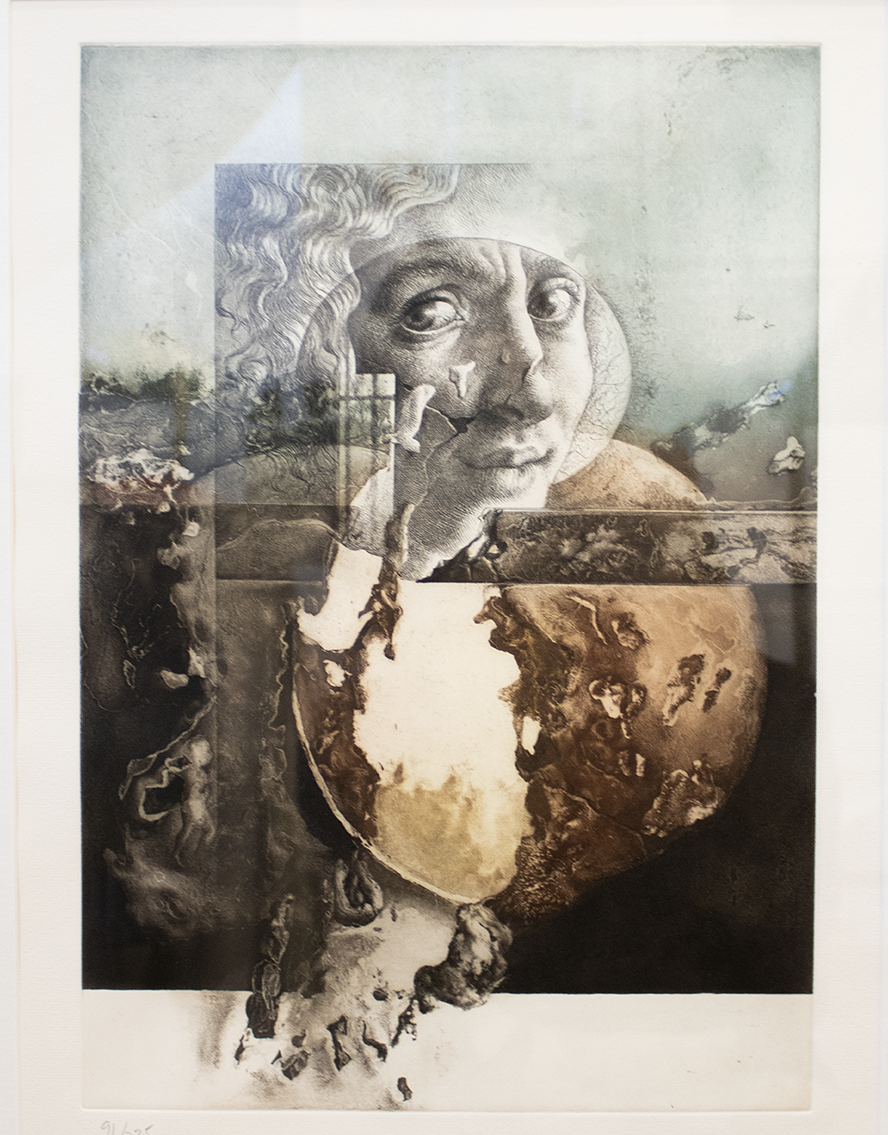
In this ink engraving by Eduardo Naranjo, the artist creates a powerful and captivating composition that merges surrealism with hyperrealism. At the center of the piece is a face, its gaze fixed directly upon the viewer, establishing a sense of intense connection and confrontation. The meticulous realism of the face contrasts with the surreal elements that surround it, creating a tension between the known and the unknown, the real and the imagined.