
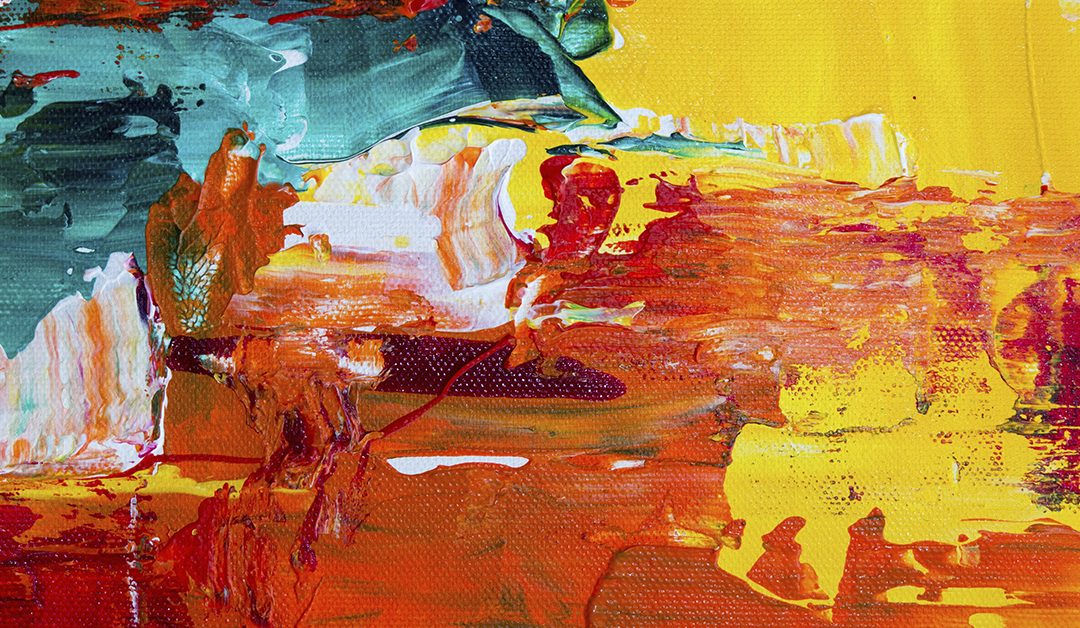
Imagine if every color you encountered carried a hidden message. For centuries, artists, designers, and even rulers have embedded meaning into colors, building visual codes that spoke louder than words. When we look at a painting, a sculpture, or even the tiles of a centuries-old temple, we often perceive color as decoration. Yet color is never merely visual; it carries stories, beliefs, and human ingenuity across time and space. From the vibrant reds of sacred robes to the shimmering blues of distant trade routes, colors are a living language, telling us who we are, what we value, and how we perceive the world. Certainly, a single brushstroke of pigment could communicate power, luxury, devotion, or even danger.
In this exploration, we trace the journey of three key colors: red, blue, and green through cultures, epochs, and materials, uncovering the rich narratives each hue embodies.
Blue: The Sacred Luxury
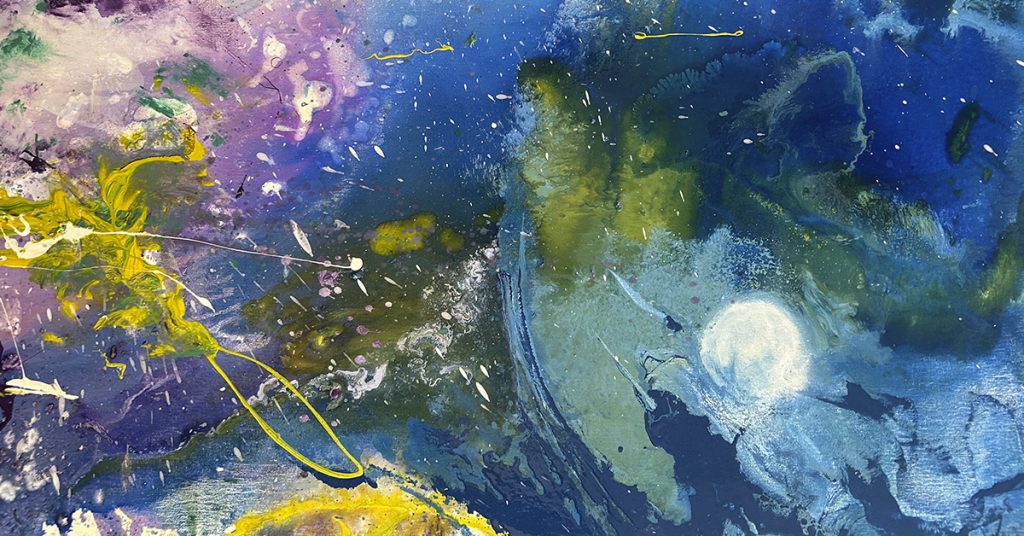
Close-up of Ángel Jurado’s Abstracción lunar (2017)
In Europe, during the Middle Ages, blue was an inestimable pigment and resource. Ultramarine, made from lapis lazuli mined in Afghanistan, was rarer and more costly than gold. Naturally, artists reserved it for their most important subjects, which is why the Virgin Mary and other sacred figures so often appear draped in radiant blue. The color signaled holiness, divinity, and a devotion that no earthly wealth could surpass, reflecting both spiritual reverence and the wealth required to acquire the pigment.
In contrast, by the Edo period in Japan, indigo dye transformed everyday life. Deep, enduring, and widely accessible, it colored textiles and prints, marking social identity and artistic innovation.
Even in modern art, blue retains its allure. Yves Klein’s “International Klein Blue” captures immateriality and depth, inviting the viewer to experience the boundless space of thought and emotion. Across time and place, blue tells stories of human desire for the eternal, the sacred, and the sublime.
red: passion and power

Close-Up of José Manuel Broto Cuadro Abstracto
If blue was the color of heaven, red was the color of the earth. Therefore, blood, fire, and raw emotion. Nobles wore crimson robes not only to flaunt their wealth but also to project authority. In art, red becomes a double-edged sword: symbolizing love and vitality on one canvas, but anger and violence on another. It is a color that demands attention and commands respect.
If blue was the color of heaven, red was the color of the earth. Therefore, blood, fire, and raw emotion. Nobles wore crimson robes not only to flaunt their wealth but also to project authority. In art, red becomes a double-edged sword: symbolizing love and vitality on one canvas, but anger and violence on another. It is a color that demands attention and commands respect.
The story of red is inseparable from the labor and danger of its production. Ancient Egyptian artists ground red ochre from iron-rich clay, while medieval European painters prized vermilion, extracted through a complex—and toxic—process from mercury sulfide. The rarity of certain reds made them markers of status and power, visible in religious art, royal garments, and public pageantry. Even in Native American pottery, red pigments drawn from local clays signify strength, protection, and community identity.
Across continents and centuries, red pulses with intensity, its symbolism shifting like fire, sometimes joyous, sometimes somber, always compelling.
green: beauty with a deadly secret

Close up of Ricardo Freijo Larios “Evasion”.
Green has always been a color of life, yet its meanings shift with context. In Islamic art, green represents paradise, abundance, and divine blessing, appearing in mosque tiles and calligraphy. In Europe’s Middle Ages, green could signify spring, fertility, or even the unpredictable, sometimes associated with trickery or the devil in folklore.
Nevertheless, in the 19th century, certain green pigments, like Scheele’s Green and Paris Green, were made with arsenic. Wallpaper, clothing, and even toys carried this alluring yet toxic shade. Consequently, to live surrounded by green was to flirt with death.
In China, jade green symbolized virtue, immortality, and status, adorning both sculpture and jewelry. Meanwhile, the vibrant green feathers of the quetzal bird were treasured by Mesoamerican civilizations, woven into ceremonial headdresses and reflecting spiritual power.
Even in modern painting, green can carry vitality, harmony, or tension, as seen in the Fauvist works of Henri Matisse.
colors as cultural codes
In summary, colors are never neutral. They are cultural codes, shaped by time and culture. What once stood for sacred purity or royal power might now signal sustainability, rebellion, or luxury. When you encounter a work of art, the palette isn’t just for aesthetic pleasure; it’s a message across time.
Each pigment, each hue, tells stories of trade, technology, emotion, and belief. From the sacred reds of imperial China to the luminous blues of Renaissance altarpieces, from the vitality of green in indigenous art to the symbolic richness of gold, colors are inseparable from human history.
By tracing these hues across cultures and centuries, we glimpse not only the evolution of art but the shared threads of human imagination, desire, and expression.
So, the next time you step into Madame Flihan Art Gallery, pause for a moment. Look beyond the brushstrokes. Ask yourself: What hidden messages might these colors be carrying? Art speaks in colors, and once you learn the language, you’ll never see a painting the same way again.