
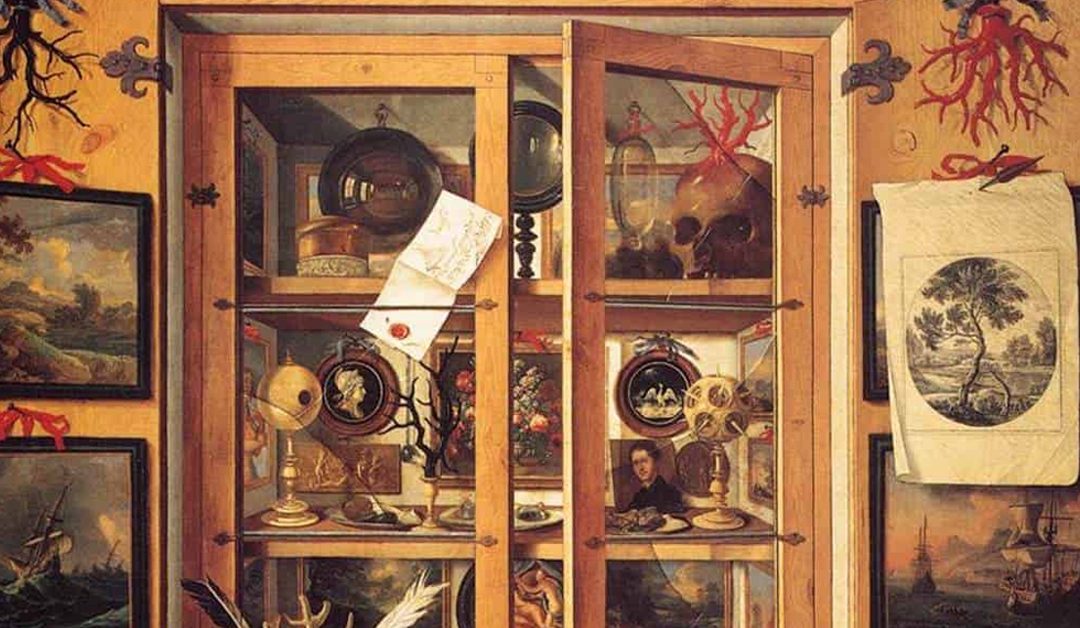
Human beings have collected objects since prehistory: shells, bones, tools, art, and photos. We gather not merely for accumulation but in response to profound psychological, social, and existential needs. When you walk through a museum, an art gallery, or look at someone’s curated bookshelf or digital feed, there’s more than meets the eye.
In the context of art, understanding these impulses can help us appreciate not only the objects but the stories behind them.
Here are three core reasons we collect, and what it means for galleries, artists, and collectors.
To Remember: Anchors in Time and Mortality
One of the most essential impulses behind collecting is memory. Objects serve as time capsules, preserving moments, people, places, and emotions.
Whether it’s a photograph, a painting, or a relic from a journey, each piece helps us recall our past and make sense of our personal narrative.
Cognitive psychology supports this: collecting helps us create external memory aids. Artifacts and images enable us to counteract the natural forgetting curve, giving physical shape to what might otherwise slip away.
Museums, archives, and personal collections all perform this critical function: preserving the tangible traces of human life.
In psychoanalytic theory, the act of collecting is sometimes linked to managing primary losses, nostalgia, or anxiety about mortality. A study “On the Psychodynamics of Collecting” examines how collecting can serve as a defence or sublimation in relation to trauma and loss.
In some cases, the collector’s attachments to objects help to reconstruct a sense of continuity when other aspects of identity feel disrupted.
More than aesthetics, curating artworks is preserving pieces of time and culture. Whether local artists or imported works, each brings with it contexts of history, emotion, and memory, both collective and individual.
To Show Identity: Expression, Status, and Belonging

We do not collect in a vacuum; what we choose to keep says something about who we are, or want to be. Collections express identity, personal taste, cultural values, affiliations, status, and even ideology.
A recent academic project on Ultra-High-Net-Worth Individuals’ (UHNWIs) collecting behavior shows how collectors use their collections for legacy, social belonging, competence, and self-expression (beyond mere investment).
This suggests that collecting is deeply tied to self-concept and social signaling.
Consumer psychology research similarly finds that collectors often build their collections not simply for individual items, but for the sense of constructing something greater, a whole, a theme, a narrative. As collections grow, collectors often shift their attention from individual pieces to the coherence and story of the set.
For galleries, this means that art is incorporated into identity. Buying a painting or sculpture is choosing the aesthetic, values, and stories you want to surround yourself with.
To Find Meaning, Order, and Emotional Resonance
Control, order, and mastery
In uncertain times, curating a collection can be therapeutic.
Research shows that collecting gives people a sense of agency: choosing, arranging, caring for objects helps assert control. It’s a ritual of selection and preservation.
Emotional and psychological well-being
Hobbyists and collectors often report high satisfaction, purpose, and pleasure derived from their collection. The emotional value frequently far outweighs monetary value. Emotional connection, through nostalgia, beauty, connection to place, or experience, is central.
Certainly, art collecting can provide emotional enrichment, intellectual stimulation, and community building.
Social and cultural connection
Collecting is also social: connecting with other collectors, artists, galleries, and participating in events. One of the motivations in the qualitative study on “Motivations to Collect: How Consumers Are Socialised to Build Product Collections” was interaction: collectors learn, share, show, and grow through social contexts.
The Modern & Digital Dimension: Collecting in the Age of Screens
While we often think of collecting as something tangible (shells, paintings, rare books), the digital world has revealed how deeply ingrained this impulse truly is.
Online, we collect images, screenshots, likes, followers, playlists, and memories. Each of these acts mirrors the ancient instinct to preserve, to curate, and to find meaning through accumulation.
On platforms like Instagram or Pinterest, we build galleries of our lives and interests, organizing images and moments as carefully as any curator might. The “saved posts” tab or a folder of screenshots on our phones functions as a modern cabinet of curiosities, a digital archive of beauty, emotion, and identity.
Every saved image, every liked photo, every shared story captures a fleeting moment we want to keep.
Sociologists note that this digital form of collecting satisfies the same needs as traditional collecting: the need to preserve memory, express selfhood, and feel control.
Even the pursuit of likes and followers can be seen as a form of collecting. Social validation has become a new kind of currency, where numbers substitute for tangible trophies. Psychologists from the American Psychological Association point out that this behavior taps into the same reward systems that motivate physical collecting: each new follower or “like” triggers a dopamine response, reinforcing the desire to collect more.
In the Algarve, where art and lifestyle intertwine under the same light, the digital space allows local galleries to connect with collectors worldwide. Each post, each shared image, each digital story is the continuation of humanity’s oldest habit: to hold on to what moves us.
Collection as Human Song
To collect is to anchor ourselves in time, express our identity, impose order on chaos, and discover meaning.
Whether you are drawn to collecting ceramics, landscape paintings, or simply gathering moments on your phone, you participate in an ancient, universal impulse.
We invite you to explore art as more than what you see, let it become part of your story. Start building your art collection today. Discover with us what pieces speak to you, that reflect your past, shape your identity, and enrich your life.