

Ever notice how looking at a sad painting sometimes makes you feel better? It might seem counterintuitive. After all, you expect that art that depicts grief, sorrow, or loss would naturally bring us down.
Yet, many of us walk away from a tragic artwork feeling strangely uplifted, even comforted. This curious phenomenon is more than just a quirk of human emotion; it’s a psychological paradox that has fascinated researchers and art lovers alike.
A recent study by Dhallu, Winner, and Drake (2025) in The Journal of Positive Psychology sheds light on this paradox, revealing that tragic art can offer real emotional benefits.
While it may seem painful at first glance, engaging with art that evokes sadness can, in fact, provide a unique form of solace. In this post, we will explore the interplay between empathy, emotional processing, and catharsis.
The Emotional Pull of Tragic Art

Somber art has a way of drawing us in. Think of a painting that depicts a figure in mourning, a desolate landscape, or a poignant moment of loss.
A priori, we might feel a pang of discomfort, a reflection of the depicted sorrow. But instead of leaving us feeling depleted, these works can trigger an empathetic response.
Psychologists explain that when we witness another’s grief, even on canvas, our own emotions are activated, creating a sense of shared experience. This process of emotional mirroring allows viewers to connect deeply with the artist’s vision. We begin to recognize our own feelings in the sorrowful scenes, whether it’s melancholy, regret, or longing.
Paradoxically, this recognition does not burden us; it reassures us. By acknowledging our emotions through the lens of another’s art, we gain insight and perspective, making our own sadness more manageable. Art, in this sense, becomes a bridge. It connects the viewer and the artist across time, space, and circumstance.
By engaging with tragedy through art, we are reminded that we are not alone in our feelings. That connection, however fleeting, is a subtle but powerful comfort.
Catharsis: safe emotional release

One of the most compelling reasons sad art can feel comforting is its ability to provide catharsis. An overall safe, structured space for experiencing strong emotions.
Catharsis, a concept with roots in ancient Greek philosophy, refers to the emotional release that occurs when we confront and process feelings of grief or anguish. When we encounter sadness in art, we can engage with these emotions without real-world consequences, allowing for reflection and release.
According to Dhallu, Winner, and Drake, viewing tragic art facilitates this process by offering a controlled environment where intense emotions can be explored. Unlike personal experiences of loss or trauma, art presents sorrow at a distance. We can witness it, feel it, and ultimately let it go, leaving us lighter and more connected to ourselves and others.
In this way, the very works that initially evoke sadness end up producing comfort and emotional relief.
sadness as a path to emotional growth
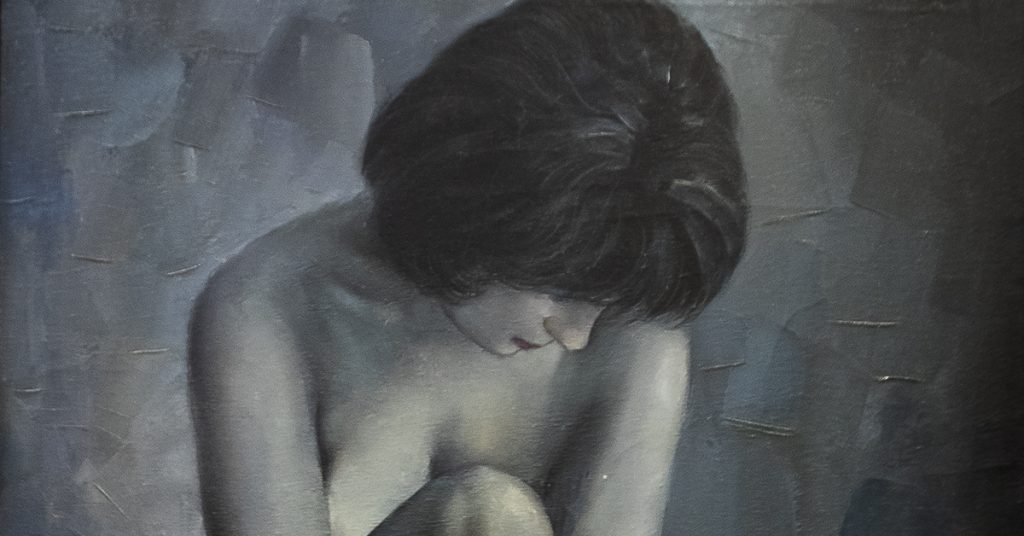
Beyond empathy and catharsis, sad art can also contribute to emotional growth. Experiencing negative emotions in a reflective, controlled way helps us develop resilience and emotional intelligence.
By confronting difficult feelings within the safe confines of an art gallery or museum, we practice understanding and regulating our emotions. This emotional exercise can make us more adaptable in daily life, improving our capacity to navigate personal challenges with grace and insight.
Moreover, tragic art often carries layers of meaning that reward thoughtful contemplation.
A painting of a solitary figure in a dimly lit room may not just evoke sadness; it may prompt reflection on solitude, vulnerability, or the fleeting nature of life.
These reflections can enrich our understanding of ourselves and the world around us, turning initial discomfort into meaningful insight.
Discovering Emotional Depth at MadameFlihan Art Gallery
At MadameFlihan, we celebrate art that moves you, whether it evokes joy, awe, or sorrow.
We understand that the emotional impact of art is not limited to happiness or beauty; the bittersweet moments matter just as much. Our exhibitions feature works that invite introspection and emotional connection, encouraging viewers to embrace the full spectrum of human experience.
By witnessing grief, empathy, and catharsis on display, visitors often leave with a renewed sense of emotional clarity and comfort. In a world where sadness is often hidden or minimized, art provides a rare opportunity to acknowledge and process it safely.
So next time you encounter a painting that makes your heart ache, take a moment to linger.
That pang of sadness is an invitation to connect, reflect, and ultimately, to feel lighter.